Flemish study investigates impact of climate change in 142 cities worldwide

A study by the Flemish Institute for Technological Research (VITO) investigates the impact of climate change and heat stress on cities worldwide, including Antwerp and Ghent. The data should provide a picture of what the situation might look like by 2100, according to three different scenarios.
It seems obvious that there may be more heatwave days in the future. Nevertheless, collecting the enormous amount of data was important, researcher Niels Souverijns of VITO says. “There was a significant lack of detailed, specific data for cities,” he explains. “This hindered effective response measures and limited the population's ability to adapt.”
According to Souverijns, many squares are still being built without greenery. “We must therefore continue to hammer home this point.”

What is also striking is that the risk of extreme heat can vary greatly within a city such as Ghent or Antwerp. Suburbs such as De Pinte, located south of Ghent, are generally cooler than Sint-Amandsberg, for example, which is close to the city centre. In the port of Antwerp or along the Antwerp ring road, it is significantly warmer during a heatwave, because of the amount of concrete.
“We mainly want to literally map the vulnerable areas in cities, in order to help mayors and others take the right measures,” says Souverijns. “Take retirement homes, for example. Wouldn't it be best if they were located in a green area? That is not always the case.”
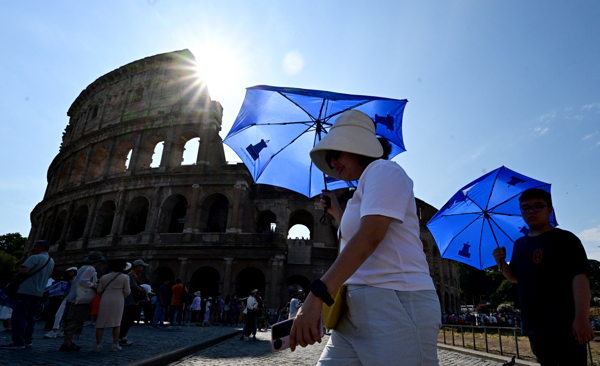

In Ghent and Antwerp, there are currently about four days of heatwaves a year. That figure could rise sharply in the future. In a very negative scenario, it could be as high as 50 days a year – in the positive scenario, we will remain below 20 days a year in a few decades.
Heat stress is a danger with an increasing impact, Souverijns says. “It is responsible for approximately 500,000 additional deaths per year worldwide.”
#FlandersNewsService | Illustration © PHOTO ALEX HALADA / AFP
Related news