Cultural Compass: Thought-provoking operas, Antwerp Art Fair and Palestinian embroidery
LauraVanSeveren-OBV-30.jpg)
Every Sunday, Belga English picks its favourite events from the cultural agenda. This week: Opera Ballet Vlaanderen spotlights a classic opera and a new composition that share overlapping themes, Antwerp hosts a major art fair featuring international and local artists, and Momu explores one of Palestine’s enduring cultural practices.
Barzakh, 10-16 December, Opera Ballet Vlaanderen, Antwerp
Barzakh takes its name from the Arabic word for the passage between life and death, a liminal space where the soul waits in a state of sleep for final judgement. It is a boundary between the familiar and the unknown, a notion that resonates strongly with those held in pre-trial detention. During the creation of this opera, the team worked closely with 15 people in Antwerp and Ghent detention centres, where the feeling of existing “in between” is a daily reality.

The project grew out of workshops led by theatre-maker Thomas Bellinck in Belgian prisons. In these sessions, incarcerated participants helped shape the performance from the ground up. They chose opera as a framework, a form that often presents criminal acts and imprisonment in a romanticised fashion. As Bellinck notes: “In prison you have a deep intertwining of perpetrator and victimhood, which is much more complex than the world of opera.”
Composer Osama Abdulrasol transformed the discussions into an expressive score for singers and chamber orchestra, enriching the production’s critical reflection on both opera’s worldview and the prison system.
“Many of our initiatives provide a moment of distraction, helping people in detention take their minds off things. A project like Barzakh can mean a lot in someone’s life,” the opera’s team says. In Barzakh, the creative and the carceral meet in a space of reflection, where those living through real-world limbo give shape to an artistic exploration of the in-between.
Don Giovanni, 14 December-20 January, Opera Ballet Vlaanderen, Ghent & Antwerp
Opera Gent will close in January for major renovations, and one of opera’s most enduring works, Don Giovanni, serves as a fitting farewell.
From the outset, Don Giovanni cuts a destructive path: after killing the Commendatore while escaping Donna Anna's justified wrath, he returns to his pursuit of women, abandoning Donna Elvira once more, attempting to seduce the bride Zerlina and ultimately being confronted at a feast by masked avengers.
Even then, he persists, swapping clothes with Leporello to deceive yet more victims. A tangle of mistaken identities unfolds until master and servant meet in a cemetery, where the statue of the Commendatore issues its chilling warning. Don Giovanni boldly invites it to dinner, refuses repeated calls for repentance and, taking the statue’s icy hand, is finally dragged into hell.

Behind the scenes, the production poses its own challenges in this minimalist production. Wietse Bovri, a producer at OBV closely involved in the process, notes that “the difficulty is that the little that actually appears on stage attracts all the more attention from the audience. We face the challenge of translating the designs into reality as accurately as possible to make the concept work. Experience shows that simple designs are often the most difficult.”
One element, an imposing 12m ladder that a singer must climb, demands both precision engineering and artistic finesse.
For director Tom Goossens, the opera’s core lies not only in its notorious protagonist but in the people who surround him. “Don Giovanni is about the people around him, and they repeatedly give him chances," he says. "They constantly try to make Don Giovanni understand his guilt and his actions. In the end, he is asked five times: repent. He doesn't, and so he is punished. Responsibility, forgiveness, giving him chances: that's already a great nuance.”
Art Antwerp, 11-14 December, Antwerp Expo
With the promise of an exceptional blend of discovery and connection in an intimate, boutique setting, Art Antwerp showcases 79 galleries from 11 countries. The fair invites collectors, curators, artists and visitors to engage in meaningful conversations, a refreshing contrast to larger, impersonal fairs.

The emphasis on solo and duo presentations offers room to discover new voices or dive deeper into established ones. Highlights include Katrien De Blauwer at Gallery FIFTY ONE (Antwerp), an opportunity to explore her distinctive artistic vision up close. Kévin Bray & Jen Liu at Upstream Gallery (Amsterdam) present expect thought-provoking duo works. Maja Klaassen at Dürst Britt & Mayhew (The Hague), Luca Bertolo at Arcade (London), Gijs Milius at Galerie Mieke van Schaijk (‘s-Hertogenbosch) and Laurence Aëgerter at galerie binome (Paris) also draw significant attention this year.
Beyond the artworks, the fair features large-scale installations, sculptures along the aisles, a Taschen bookshop, and a café and restaurant by KTCHN. There will also be a programme of talks, guided tours, book signings and conversations to deepen ’ engagement with contemporary art.
Embroidering Palestine, 13 December-7 June, MoMu, Antwerp
Tatreez, the rich tradition of Palestinian embroidery, is far more than decoration. For generations, it has been one of Palestine’s most significant cultural practices, with every region recognisable by its own motifs, textiles and stitchwork. In the 19th and early 20th centuries, embroidery formed a visual language shared among women, signalling both identity and place of origin.

This exhibition follows Palestinian dress and embroidery through four themes: nature, splendour, power and change. Rooted in rural life, tatreez grew out of women’s close relationship with the land, from motifs inspired by local flora to indigo dyes cultivated in the Galilee.
Yet embroidery also conveyed social standing. Weddings, central moments in a woman’s life, called for garments of extraordinary craftsmanship. Golden thread, mother-of-pearl shoes, silver jewellery and ornate headdresses reveal a world of dazzling artistry, while talismanic motifs speak to the protective power clothing was believed to hold.
Tatreez’s significance endures today, transformed by history into a symbol of identity, resistance and solidarity. Since the Nakba of 1948, the displacement and dispossession of hundreds of thousands of Palestinians, embroidery has carried political meaning, asserting cultural continuity in the face of rupture.
The exhibition traces this evolution, showing how a rural craft became a powerful emblem of Palestinian identity and how contemporary designers continue to draw inspiration from its forms and stories.
Ongoing events
Antwerp
Women’s Business / Business Women
Donas, Archipenko & La Section d'Or: Enchanting Modernism
GIRLS: On Boredom, Rebellion and Being In-Between
Eugeen Van Mieghem: City in Motion
Early Gaze: Unseen Photography From the 19th Century
Danial Shah: Becoming, Belonging and Vanishing
Magritte: La ligne de vie
Suske & Wiske
Brussels
Brussels, la Congolaise
Loisirs-Plezier: Brussels 1920-1940
John Baldessari: Parables, Fables and Other Tall Tales
MAURICE: Tristesse et rigolade
Fire
Luz y sombra: Goya and Spanish Realism
Ghent
Beauty as Resistance
Fairground Wonders
Stephan Vanfleteren: Transcripts of a Sea
Marc De Blieck: Point de voir
(Un)Shame
Monique Gies - Inside Views
Hasselt
Rococo Reboot
Michael Beutler
(MOH)
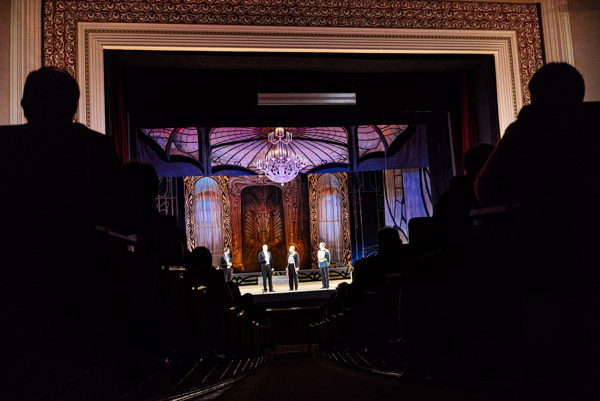
#FlandersNewsService | A scene from Opera Ballet Vlaanderen's Barzakh © PHOTO LAURA VAN SEVEREN / OBV
Related news