Venice Biennale jury resigns over controversy surrounding Russia and Israel

The jury of the Venice Biennale, one of the world’s leading contemporary art events, resigned this week, days before the festival opens to the public. The Biennale organisation confirmed the decision after mounting controversy surrounding the participation of Russia and Israel and the festival’s position on artists representing countries accused of war crimes or crimes against humanity.
In a statement published in the art magazine eFlux, the five-member jury led by Brazilian curator Solange Farkas said it was stepping down “in recognition” of its earlier decision not to award prizes to artists representing countries whose leaders are under investigation by the International Criminal Court (ICC).
The jury had first outlined its position in a “statement of intention” published on 23 April ahead of the 61st edition of the Biennale, titled In Minor Keys. In the text, jurors said they recognised “the complex relationship between artistic practice and nation-state representation” at the Biennale and stressed their “commitment to the defense of human rights”.

“Consequently, this jury will refrain from considering those countries whose leaders are currently charged with crimes against humanity by the International Criminal Court,” the statement read.
The jurors also expressed solidarity with the exhibition’s artistic director, Koyo Kouoh, and her curatorial vision, quoting her call to reject “the spectacle of horror” and instead “find the oases, the islands, where the dignity of all living beings is safeguarded”.
While the jury did not explicitly name any countries, the move was widely understood to refer to both Russia and Israel. The ICC has issued arrest warrants for Israeli prime minister Benjamin Netanyahu and former Defence minister Yoav Gallant over alleged war crimes linked to the war in Gaza. Russian president Vladimir Putin is also the subject of an ICC arrest warrant over alleged war crimes in Ukraine.
"This jury will refrain from considering those countries whose leaders are charged with crimes against humanity by the International Criminal Court"
The resignation follows weeks of tensions surrounding Russia’s planned return to the Biennale for the first time since the invasion of Ukraine. Earlier this month, the European Commission warned the Biennale it could lose up to 2 million euros in EU subsidies unless it reconsidered Russia’s participation.
According to Italian media, the Commission argued that admitting a Russian national delegation risked undermining European sanctions and could be interpreted as accepting support from the Russian state “in exchange for a cultural platform”.
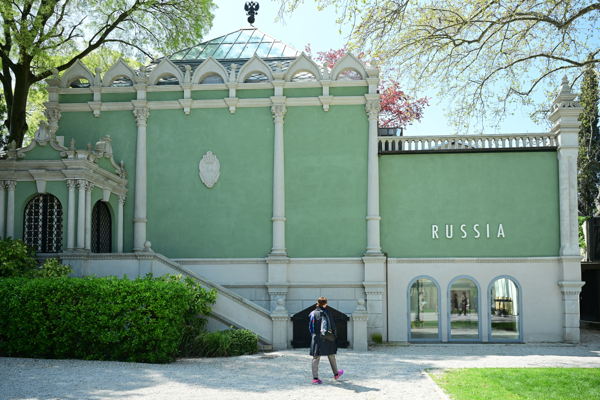

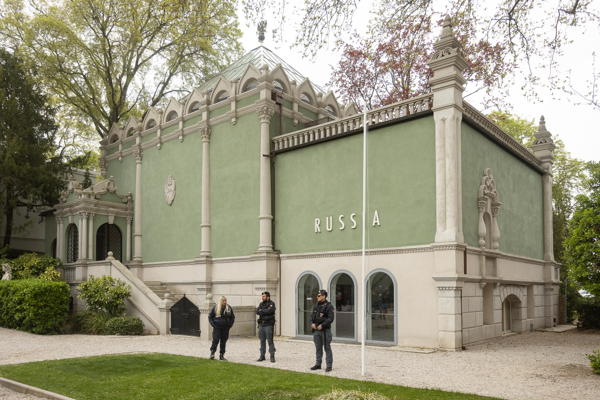
Following political and cultural pressure, the Biennale Foundation later announced that the Russian pavilion would remain closed to the public during the exhibition period, opening only during the four press preview days from 5-8 May. Festival president Pietrangelo Buttafuoco had previously defended an inclusive approach, arguing that the Biennale should transcend geopolitical conflicts.
The issue also sparked criticism within Italy. Culture minister Alexander Giuli announced he would boycott the opening ceremony and called for the resignation of board member Tamara Gregoretti over the decision to readmit Russia.

Several European governments had already voiced opposition to Russian participation. Last month, 22 European culture ministers, including Flanders' Caroline Gennez, urged the Biennale to exclude Russia entirely. “There can be no place for Russian state representation or propaganda on a leading cultural platform such as the Biennale,” Gennez said at the time.
The Venice Biennale runs from 9 May to 22 November. Alongside Farkas, the resigning jury members included Zoe Butt, Elvira Dyangani Ose, Marta Kuzma and Giovanna Zapperi.
The Russian pavillion © PHOTO MIRCO TONIOLO / SIPA PRESS
Related news