UK to rejoin Erasmus+ student exchange programme from 2027

The United Kingdom will rejoin the Erasmus+ student exchange programme from 2027, following an agreement reached between the UK and the European Union on Wednesday. The deal was confirmed by European Commissioner for Trade Maroš Šefčovič and the British minister for relations with the European Union, Nick Thomas-Symonds.
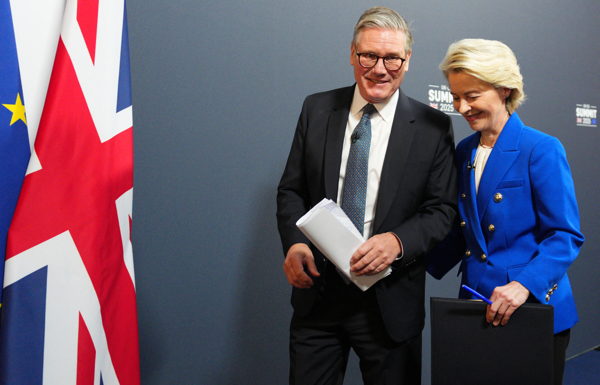
The decision to return to Erasmus+ was taken during an EU–UK summit in May and forms part of the Labour government’s broader effort to reset relations with the EU after Brexit. The UK withdrew from the programme in 2020, when the then-Conservative government argued that it did not offer sufficient value for money.
From the 2027–2028 academic year, British students will once again be able to study at European universities, while students from EU member states will also be able to study in the UK. University students will be able to spend up to one year abroad as part of their degree programme, at no additional cost.
Funding and participation
According to the British government, more than 100,000 people in the UK are expected to benefit from the programme in its first year. The UK will contribute around 570 million pounds (648 million euros) for participation in Erasmus+ in the 2027–2028 academic year.
“Further participation in Erasmus+ in the next multiannual budget [from 2028] should be decided at a later date and based on a fair and balanced contribution,” the government said in a press release.
“Today’s agreement proves that our new partnership with the EU is working,” Thomas-Symonds said. “Participation in Erasmus+ is a major victory for our young people, as it breaks down barriers and broadens horizons, ensuring that everyone, regardless of their background, has the opportunity to study or train abroad.”
Erasmus+ was launched in 1987 as a student exchange scheme for higher education. Over time, it has expanded to include internships, vocational training, volunteering and participation in international educational, cultural and sporting projects.
Broader EU–UK cooperation
Beyond Erasmus+, the EU and the UK have also launched “exploratory talks” on the UK’s possible integration into the EU’s internal energy market. “Closer cooperation on energy would bring real benefits to businesses and consumers in Europe, stimulate investment in the North Sea, and enhance energy security,” Šefčovič and Thomas-Symonds said in a joint statement.
By the next EU–UK summit, both sides aim to conclude negotiations on several outstanding issues, including a Youth Experience Scheme allowing 18- to 30-year-olds to work and study abroad for up to two years. They also reaffirmed their commitment to fully implementing existing agreements, such as the Withdrawal Agreement and the Windsor Framework, which governs post-Brexit arrangements for Northern Ireland.
Glasgow University © PHOTO ANDY BUCHANAN / AFP
Related news