‘Turning point’ for ocean protection as High Seas Treaty comes into force

The UN treaty for the protection and sustainable use of biodiversity in the high seas enters into force on Saturday. Brussels is among the candidates to host the headquarters of the secretariat.
The Biodiversity Beyond National Jurisdiction (BBNJ), also known as the High Seas Treaty, is the first legally binding international agreement for the protection of life on the high seas.
The treaty is in line with the Kunming-Montreal Agreement concluded in 2022 at the UN biodiversity summit in Canada, which stipulates that 30 per cent of the sea must be protected by 2030. This will enable marine reserves or protected areas to be established on the high seas.
The international community must also be given more insight into and say in decisions about activities that could threaten biodiversity in the high seas.
"Belgium remains firmly committed to this agreement, for our North Sea, for the ocean and for the future of our planet"
A total of 144 countries and the EU have signed the BBNJ. Palau, an island in Oceania, was the first to ratify it in January 2024, while Brazil, Iceland, Ecuador, Qatar and Ghana were the last to do so. Belgium ratified the treaty on 9 June last year at the UN Ocean Conference in Nice.
The US signed the treaty in 2023 but has not yet ratified it, while India adopted the treaty in 2024 but legislation on ratification is still pending. The UK introduced legislation on the matter in 2025, though parliament is still to ratify it, and Russia has neither adopted nor ratified the treaty.

Belgium’s minister for the North Sea, Annelies Verlinden of CD&V, has called the entry into force “a historic turning point for the protection of the ocean” in a statement issued by the Foreign Affairs ministry.
“For the first time, countries are establishing clear rules to protect nature on the high seas, based on science and cooperation,” she said. “Belgium remains firmly committed to this agreement, for our North Sea, for the ocean and for the future of our planet.”

Brussels is a candidate to host the secretariat’s headquarters, alongside Valparaiso in Chile. China has also proposed the city of Xiamen as host.
“In Brussels, the BBNJ Secretariat can be operational from day one: the offices are ready,” said Foreign minister Maxime Prévot of Les Engagés. “The permanent presence of international actors and scientific and technical expertise also guarantees progress throughout the year, and not just at peak times such as COPs.”
According to the Marine Protection Atlas, only 2.9 per cent of the world’s oceans are fully or largely protected from human activities such as overfishing and pollution. Only 0.9 per cent of the high seas are protected.
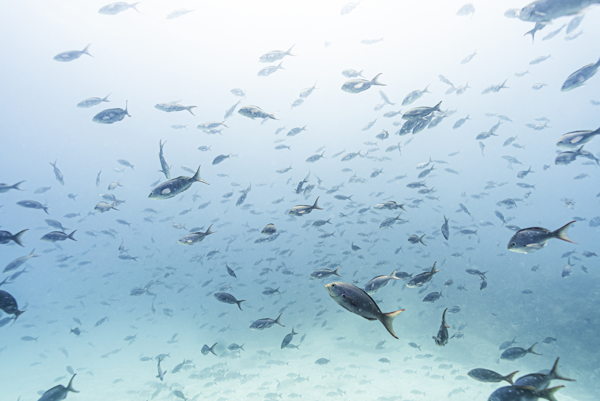
A diver at the North Seymour Island dive site in the Galapagos archipelago, Ecuador © PHOTO ERNESTO BENAVIDES / AFP
Related news