Social housing waiting list hits record high as emergency plan is launched

The waiting list for social housing in Flanders has climbed to a record 209,843 households, prompting housing minister Melissa Depraetere (Vooruit) to launch an emergency plan aimed at building more social homes faster.
Demand continues to rise while construction lags behind. At the same time, the private rental market remains overheated, with monthly rents often exceeding 1,000 euros, leaving more people dependent on social housing.
Depraetere’s emergency plan combines financial incentives, stricter obligations for municipalities and faster permit procedures. The government wants to build 56,000 additional social housing units by 2042. Of those, 45,000 will be allocated across municipalities through the Binding Social Objective, while another 11,000 can be taken up by local authorities that choose to go further.

Municipalities that fail to meet their targets will face fines of more than 4,000 euros per unbuilt unit. That money will be redirected entirely towards rent subsidies for people on the waiting list.
Additional financial support
To speed up construction, housing associations will receive additional financial support. The government will lower the interest rate on its loans to housing associations from minus 1 per cent to minus 2 per cent. “Construction costs have risen enormously. As a result, far too little has been built in recent years. If we want to build more and faster, we need additional financial support from housing associations,” Depraetere said.
Part of the cost will also be borne by new tenants. While existing tenants will not be affected, new social housing tenants will pay an average of 30 euros more per month. According to the minister, this increase will be offset by lower energy bills, as social housing units are being extensively renovated and made more energy-efficient.
The government also wants to prevent social housing projects from being delayed for years by legal challenges. Appeals against permits will only be possible if complainants can show that they are directly affected. Depraetere said this should stop people from lodging objections “purely and solely to profit from a large sum of money.”
Work and language expectations
Finally, the plan places additional expectations on social housing tenants themselves. Tenants will be required to make greater efforts to learn Dutch and find work. Those who refuse to participate in job-seeking programmes could see their rent increase after two years, while tenants who find work or receive support from the Flemish employment agency VDAB could see their rent reduced again. The language requirement for oral proficiency will also be raised from level A2 to B1 once enough affordable courses are available.

To make it easier to combine work and family life, social housing tenants will be given priority for housing in the municipality where they work. “This way, we prevent your place of residence from being a barrier to employment. And we improve the work-life balance for social housing tenants,” Depraetere said.
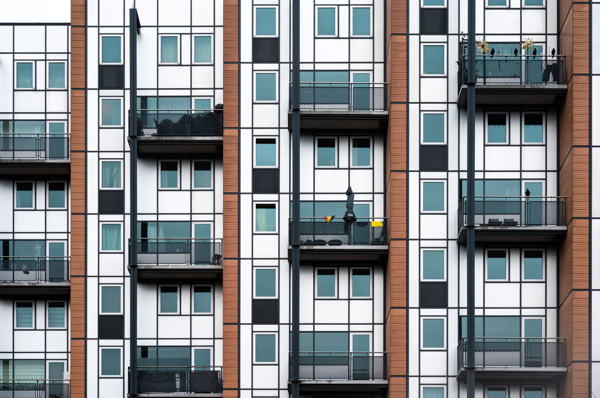
#FlandersNewsService | The Sint-Maartensdal social housing estate in Leuven designed by architect Renaat Braem
©PHOTO BELGIAN FREELANCE
Related news