Households feel impact of Middle East conflict on energy bills

As of 1 April, Belgian households on variable energy contracts are paying around 20 per cent more than before the US-Israeli war on Iran began, according to a comparison of tariff cards published by several suppliers. For those on fixed contracts, the increase is even steeper. At Engie, prices have surged by as much as 58 per cent.
The war in the Middle East, now in its fifth week, has disrupted oil and gas shipments from the region, pushing fuel prices higher and adding to inflationary pressures across Europe. Since the start of the conflict, wholesale gas prices in Europe have risen by around 70 per cent, while crude oil prices have increased by roughly 60 per cent. These jumps have driven up Europe’s fossil fuel import bill by an estimated 14 billion euros in just one month.

Oil and gas prices fell sharply on Wednesday following comments by US president Donald Trump on the war in Iran, raising hopes for a swift end to the conflict. A barrel of Brent crude, the benchmark for oil from the Middle East and the North Sea, dropped 4.7 per cent to about 99 USD per barrel, falling below 100 USD for the first time this week. The Dutch wholesale gas market, which sets the European standard, also saw prices decline by approximately 5.5 per cent.
The price drop was mirrored in European stock markets. On Wednesday morning, the CAC 40 in Paris rose 2.34 per cent, the Dax in Frankfurt 2.86 per cent, the London stock exchange 1.8 per cent and Brussels’ Bel20 2.13 per cent, buoyed by optimism that the conflict could end quickly.
Trump expressed confidence that the war would be over in "two weeks or maybe a few days longer" and said he expected the US will "do the job" in Iran.


While consumers struggle with high energy costs, European oil companies are reporting increased profits. A study by German research firm EnergyComment, commissioned by Greenpeace, found that EU oil companies earned an extra 2.5 billion euros in March due to higher margins on fuel products. Diesel accounted for the bulk of the gains, at 75.3 million euros per day, while petrol margins remained more stable.
"Governments are allowing oil companies to line their pockets"
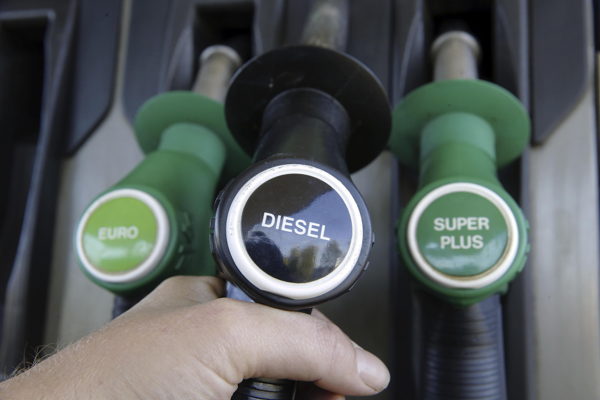
In Belgium, diesel profit margins rose by 14.1 cents per litre. Meanwhile, pump prices hit record highs, with diesel reaching 2.335 and petrol 1.9220 euros a litre.
"While people are dying in West Asia and millions of people in Europe are struggling with sky-high fuel prices, governments are allowing oil companies to line their pockets," said Joeri Thijs of Greenpeace Belgium. "Governments must urgently introduce higher taxes on all profits from fossil fuels and use that money to lower people's energy bills, invest in cheap, safe, and locally generated renewable energy, and support communities affected by the climate crisis."
Europe calls for action
On Tuesday evening, the European Commission warned that while there were "no immediate shortages of oil or gas", certain product markets, such as diesel and jet fuel, are already tightening. Energy Commissioner Dan Jørgensen urged action. "The more we can do to save oil, particularly diesel and jet fuel, the better off we will be," he said after consultations with EU ministers.
Jørgensen highlighted measures such as teleworking, lower speed limits and increased use of public transport, while noting that some countries have opted to reduce fuel prices.
"But it is clear that, when we find ourselves in a situation that could worsen, where limiting demand is indeed necessary, we encourage member states to take this into account when implementing crisis measures," he added. He also cautioned: "We are not going to return to a normal situation in the near future."
© PHOTO ROB ENGELAAR / ANP
Related news