KU Leuven collaborates on construction of unique replica of Ludwig van Beethoven piano

KU Leuven will collaborate on the construction of a unique replica of a piano used by the renowned German composer Ludwig van Beethoven during the final year of his life. The project focuses on a Conrad Graf piano, the original of which is currently housed at the Beethoven-Haus in Bonn.
The historic instrument, part of the collection of the institution dedicated to Beethoven’s life, work and influence, is no longer playable. For the first time, it will now be fully reconstructed. As part of the project, the Beethoven-Haus will make both the original instrument and its archives available to researchers.
KU Leuven will conduct fundamental research into Beethoven’s late compositional style and the piano technology of his time. The Orpheus Institute in Ghent will serve as an artistic and experimental laboratory, where the replica will be actively played and studied.
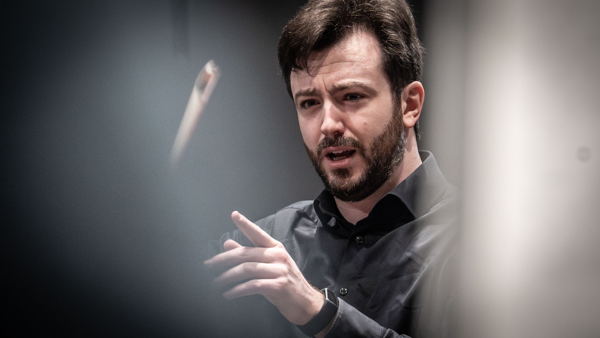
The replica will be built by piano maker Chris Maene in collaboration with pianist-researcher Tom Beghin of KU Leuven. The pair have previously created historical replicas of two other pianos associated with Beethoven: instruments by Johan Broadwood & Sons and Erard Frères.
“With this Graf replica, we complete the trilogy of three surviving Beethoven pianos,” says Professor Beghin. “We want to reconstruct not only how Beethoven sounded, but also how he thought, felt and worked at the keyboard. Together with the Broadwood, this instrument opens up new access to the music of a deaf-creating composer, at the intersection of technology, body and imagination.”

A rich history of sound
The original Graf piano was built by Conrad Graf (1782–1851), the leading Viennese piano maker of his time. Beethoven acquired the instrument on 24 January 1826 as a temporary replacement for his English Broadwood piano, which was being repaired by Graf. Ultimately, both instruments remained side by side in Beethoven’s home during the final fifteen months of his life.
The Graf piano was remarkable for its extended range of six and a half octaves, at a time when most pianos had only five to six. Its four-stringed stringing and the subtle tonal nuances made possible by its pedals further distinguished the instrument. Beethoven composed his famous Grand Fugue, Opus 134, on this piano in 1826.
The replica is scheduled for completion in early 2027. It will then remain available for research at the Orpheus Institute for five years before touring Europe. After the tour, the instrument will return permanently to the Beethoven-Haus in Bonn.
#FlandersNewsService | Interior view of Beethoven's last grand piano, a pianoforte built by Viennese piano manufacturer Conrad Graf © PHOTO INA FASSBENDER / AFP
Related news