Growing pressure for measures against rising fuel prices due to Middle East conflict

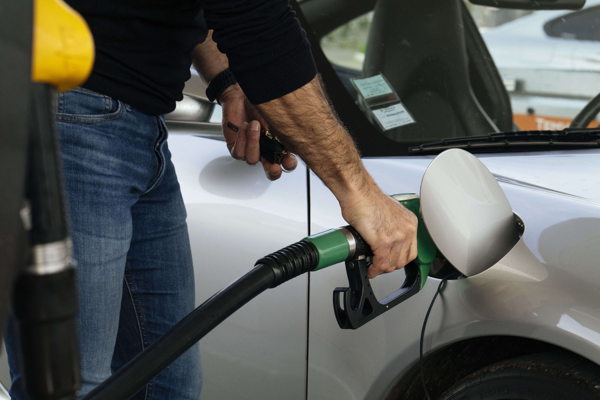
Both petrol station owners and the transport sector in Belgium are putting pressure on the government to take measures now that the war in the Middle East is causing prices at the pump to rise sharply. Croatia and Hungary have already introduced a cap on fuel prices, and other European countries are also considering measures.
On the one hand, petrol station owners in Belgium are asking the government for a solution because they are making little or no profit due to higher purchase prices combined with the system of statutory maximum prices for consumers. On the other hand, the transport sector is asking for diesel to be made cheaper, for example through excise duty reductions.
On Monday evening, Belgian energy minister Mathieu Bihet responded that the Belgian authorities are “monitoring the situation continuously and closely,” in consultation with actors from the energy sector.
One of the priorities is security of supply, and there is no problem in that regard, according to the minister. “Belgium currently has approximately 92 days of strategic oil reserves, which is above the European requirement of 90 days. These reserves are specifically intended to compensate for a physical interruption in supply.” However, as there is no interruption in supply yet, the use of these reserves is not justified at present.
“Belgium will participate fully in the discussions at the European level”
It remains to be seen whether measures will be taken to mitigate the higher energy prices for consumers. According to the Bihet cabinet, consultations were held on Monday with the Directorate-General for Energy “to identify and update the various measures that have been applied in the past and to evaluate their relevance, budgetary impact, effectiveness and division of powers”. He also points out that the European Commission is working on a package of measures. “Belgium will participate fully in the discussions at the European level.”
Croatia and Hungary have already announced that they will cap fuel prices, and in Italy, prime minister Giorgia Meloni also wants to quickly implement legislation to tackle the price spike. British prime minister Keir Starmer has also made it clear that his government is giving purchasing power the highest priority.

US Secretary of State Marco Rubio accused Iran of trying to “hold the world hostage” with its attacks on the Gulf states and the blockade of the Strait of Hormuz. This strait is important for oil transport from the Gulf states. The blockade, among other things, has caused oil prices to rise sharply.
During a visit to Cyprus, French president Emmanuel Macron announced that he and his allies are preparing a “purely defensive” mission to reopen the Strait of Hormuz and escort ships. This should enable oil and gas transport to resume once the most intense phase of the conflict in the Middle East is over. However, Iran's top security official, Ali Larijani, quickly warned that “it is unlikely that any security can be achieved in the Strait of Hormuz amid the tensions fuelled by the United States and Israel in the region.”
European Council president Antonio Costa and Commission president Ursula von der Leyen held a video conference with leaders from the Middle East and announced afterwards that the European Union is prepared to strengthen its maritime military missions in the Gulf region to protect crucial supply routes.
The Turkish ministry of defence reported that the country had once again intercepted a missile that had entered Turkish airspace from Iran. There were no casualties. This is already the second missile from Iran to Turkey that has been shot down by NATO air defences. The Israeli army in the meantime announced a new, large-scale wave of attacks on Iran.

The Brussels stock exchange managed to limit the damage on Monday. The Bel20 index ultimately lost only 0.81 per cent, closing at 5,153.04 points. During trading, the index had fallen by 2.57 per cent.
The stock markets in New York started lower on Monday. As in Europe and Asia, American investors are also concerned about the sharp rise in oil prices. Higher energy costs threaten to fuel inflation again, slow economic growth and put pressure on the profits of many companies.
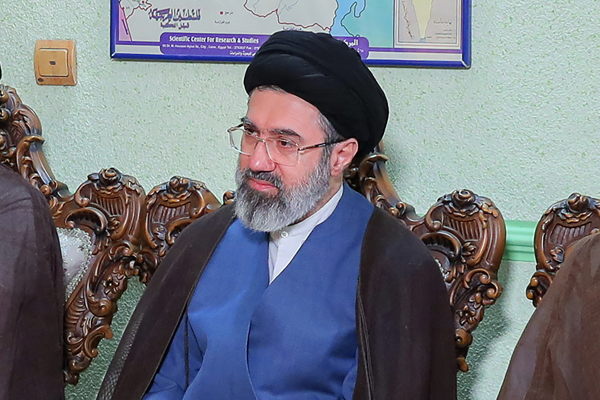
There is no quick end to the war in sight either. Iran has appointed Mojtaba Khamenei, one of the sons of the late Ali Khamenei, as supreme leader. This move is seen as a clear signal that the hardliners in Tehran are still firmly in power.
Belgian minister of energy Mathieu Bihet © PHOTO BELPRESS