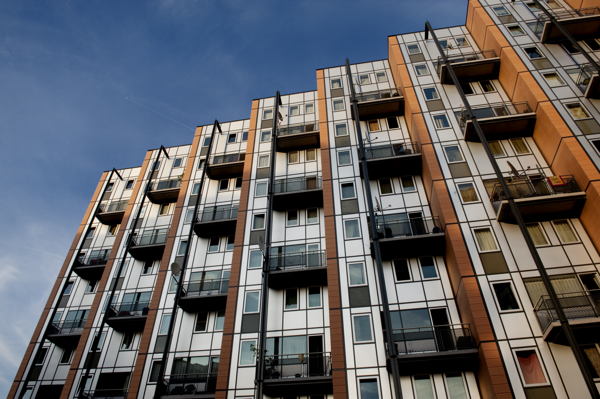
Flanders could check household waste to determine social housing fraud

The Flemish government is expanding the tools it can use to combat fraud among social housing tenants, including the possibility of taking into account the amount of household waste residents put out for collection. De Standaard reported on the plans on Tuesday.
The Flemish government plans to step up checks on domiciliary fraud, cases in which a tenant no longer lives in their social dwelling or where too many people are registered at the same address. Such fraud is considered a criminal offence and can be sanctioned.
Until now, authorities could already rely on a range of instruments to detect fraud, including consumption data, neighbourhood inquiries, home inspections and, where necessary, interviews or searches. The new draft decree adds household waste data as a possible additional indicator.
Flemish Housing minister Melissa Depraetere stressed that the measure is not intended to be used in isolation. An unusually small or large amount of waste can be a signal when there are suspicions, but she insisted there will be no systematic monitoring. "So no, we are not going to count rubbish bags," Depraetere said.


Tougher stance on fraud
The stricter approach fits into a broader tightening of social housing policy in Flanders. Tenants are facing higher language requirements, stricter conditions linked to willingness to work and increased checks on property ownership abroad.
The Housing minister defended the government's tougher stance against tenants of social housing. "If people claim to live somewhere but don't, they are taking a property away from someone who really needs it," Depraetere said. "Fraud is anti-social."
Alongside the stricter fraud checks, the government is pushing for the construction of more social housing, as there are currently more than 200,000 households on waiting lists. The government's target is to build an additional 56,000 homes by 2042.
#FlandersNewsService | © BELGA PHOTO SISKA GREMMELPREZ
Related news