Europe pledges support for farmers affected by fertiliser prices

The European Commission intends to provide “exceptional support” before the harvest season for farmers most severely affected by high fertiliser prices.
“We have an agricultural reserve containing just over 200 million euros. That is the minimum, but the aim is to double that amount,” Commissioner for Agriculture Christophe Hansen told a press conference in Strasbourg on Tuesday. He will propose to member states and the European Parliament in June that the reserve be topped up with additional funds.
“Summer is coming and this is when farmers will decide what to plant and how much fertilisers to buy,” he said. “The time to act is now.”
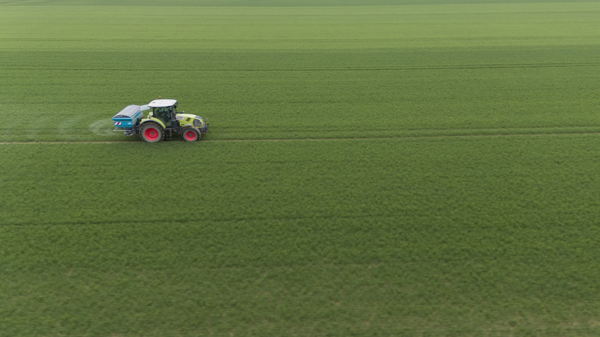

The Commission hopes to receive the green light soon, so farmers can benefit from additional support in the run-up to the new production cycle. “We are going to support European farmers so they can buy the fertilisers they need for the coming harvest season,” Hansen said.
In addition, the Commission wants to offer member states the opportunity to use unused agricultural funds for liquidity schemes and be more flexible with advance payments to farmers.
"Summer is coming and this is when farmers will decide what to plant and how much fertilisers to buy"
European farmers have been struggling for years with expensive fertilisers, which can account for up to 20 per cent of the input costs for growing crops. The war in Iran and the closure of the Strait of Hormuz have driven prices even higher. Nitrogen-based fertilisers now cost around 500 euros per tonne, compared to around 380 euros last winter.
The Commission will also examine how it can grant the fertiliser industry additional flexibility in the upcoming review of the carbon emissions trading market, provided the sector commits to making production low-carbon and offering more organic fertilisers.
Boerenbond, the association representing farmers in Flanders and East Belgium, says the European action plan does not take sufficient account of the challenges facing the sector and underutilises the agricultural sector’s own strengths. It also urges a swift amendment to the Nitrates Directive to allow for greater use of home-produced animal manure.
Illustration © PHOTO SILAS STEIN / DPA
Related news