Electrolyser factory cuts 100 jobs amid market downturn

Around 100 jobs are set to disappear at the Cummins electrolyser factory in Oevel, Antwerp province, as the American group pulls out of hydrogen production at the site, De Tijd reported on Wednesday.
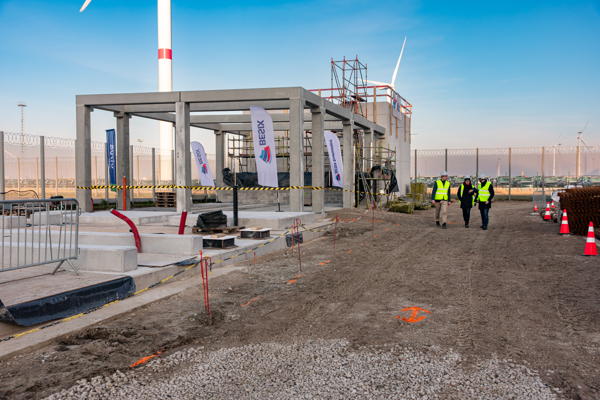
The factory, formerly known as Hydrogenics, employs about 250 people and has been active in hydrogen technology for a quarter of a century. Barely four years ago, the US engine manufacturer announced plans to invest tens of millions of euros in the Kempen site, which produces electrolysers, systems that generate hydrogen by splitting water using electricity. At the time, the company was counting on strong growth in green hydrogen and was preparing to expand its workforce significantly.
Cummins announced earlier this month that it was halting global sales of electrolysers through its hydrogen division, Accelera, after the market failed to develop as expected. Only existing contracts will be honoured. The decision will result in impairments, termination costs and write-downs totalling 458 million dollars.
Collective redundancies under way
In Oevel, the restructuring has been unfolding in phases. One of the site’s two production units was closed last year. Management has now announced its intention to carry out a collective redundancy and to cease the remaining production activities.
“At the end of 2025, management announced its intention to lay off 85 employees, and in early January, another 15 employees as part of a complete restructuring,” Marjan Vanderhoven of the ABVV Metaal trade union told De Tijd. “Social consultations are now under way in the hope of reaching an agreement and a social plan in the coming weeks.”
A full closure is not currently planned. Around 80 jobs are expected to remain, including roles linked to after-sales service and the maintenance of installed systems.
Hydrogen ambitions halted
The setback is a symbolic blow for the Kempen region, which had positioned itself as a hydrogen hub. The Oevel plant was recognised as a strategic European project and received Flemish government support for its expansion in 2022. Its origins date back to the early 2000s, during a previous wave of enthusiasm for hydrogen technology.
Hydrogen produced with renewable electricity has long been presented as a key tool for decarbonising industry, transport and heating. In practice, however, high production costs and slower-than-expected demand have dampened investment. In passenger cars, battery-electric vehicles have proven more efficient and cheaper than hydrogen alternatives.

The difficulties are not limited to Cummins. Other Belgian players have also scaled back ambitions. Agfa-Gevaert in Mortsel has struggled to generate sales for its Zirfon membranes used in electrolysers. Bekaert cut a quarter of jobs at its Wetteren plant producing electrolysis components, while John Cockerill in Liège was forced to raise fresh capital last year for its hydrogen division.
Cummins, which generated 33.7 billion dollars in global revenue last year and a net profit of 2.8 billion dollars, is also stopping electrolyser production at a recently opened facility in Guadalajara, Spain.
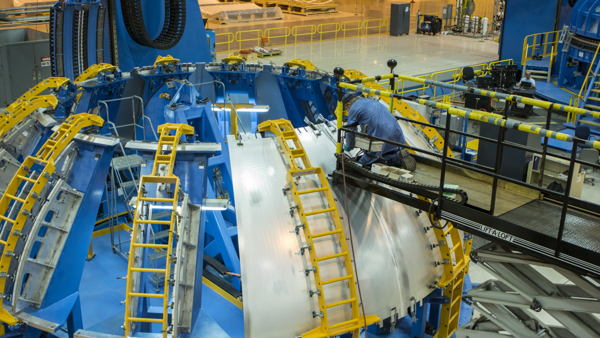
#FlandersNewsService | An electrolyser stack in Germany © PHOTO MARTINE SCHUTT / DPA
Related news