Cultural Compass: Questioning history in art, a rare painting pair and immersive images

Every Sunday, Belga English picks its favourite events from the cultural agenda. This week: An historic painting is not all it appears to be, Ensor and Evenepoel enter a dialogue in paintings that they could never have in life and two exhibitions at Botanique invite deeper visitor engagement.
The Fall of Alva’s Citadel, until 17 May, KMSKA, Antwerp
KMSKA’s newest expo offers a fascinating look at how the understanding of history is shaped as much by art as by fact. At the heart of the exhibition is a recently restored early-17th-century painting that, at first glance, appears to depict a lively scene of Antwerp’s citizens tearing down the Spanish citadel in 1577. But a closer look reveals something much richer and more ambiguous: a visual narrative layered with conflicting perspectives on power, control and memory.

Built in the sixteenth century on the orders of the Duke of Alba, the Antwerp citadel was a potent symbol of Spanish authority during the Eighty Years’ War. When rebels seized and partly dismantled it, the act was later remembered in very different ways. Some saw it as a triumphant moment of liberation, others as a chaotic episode driven by manipulation and ambition. The painting itself was reworked over time, introducing figures like a deceitful quack and children at play, subtle additions that shift the scene’s meaning and hint at deeper questions about truth and propaganda.
By unpacking the imagery and context surrounding this work, the exhibition shows how art does not just reflect history, it actively shapes how it is remembered, prompting the question: What do we choose to see, and who gets to decide?
Evenepoel/Ensor, until 3 May, James Ensor House, Ostend
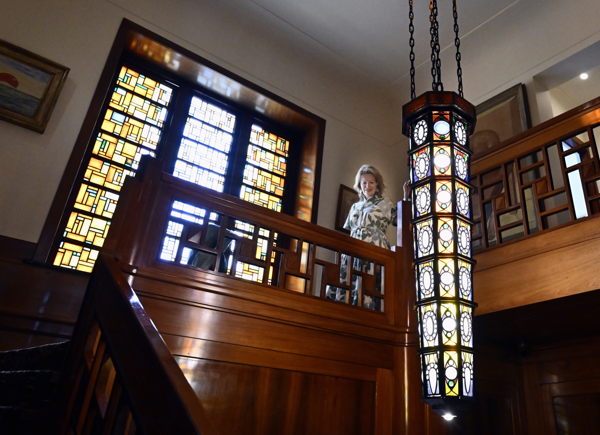
At James Ensorhuis, Evenepoel / Ensor brings together two remarkable painters whose lives never crossed but whose art speaks a shared language of colour, observation and emotional depth. This unique exhibition places works by Belgian painter Henri Evenepoel (1872–1899) alongside those of James Ensor (1860–1949), inviting an unexpected dialogue between their visions.

Both artists are celebrated for their mastery of colour and their ability to elevate everyday scenes, landscapes, city views and intimate portraits into compelling compositions rich with nuance and presence. Evenepoel’s tender portrayals, especially of children and Parisian life, contrast yet complement Ensor’s more complex, evocative approach, rooted in his beloved hometown of Ostend.
Although they worked in different contexts, which saw Evenepoel in Paris and Ensor at the Noth Sea, their shared styles show how Belgian and European art at the turn of the century was alive with innovation. By situating these two masters in conversation, the exhibition offers fresh insight into how distinct artistic paths can resonate and illuminate each other in unexpected ways.
Timelapse, until 26 April, Botanique, Brussels
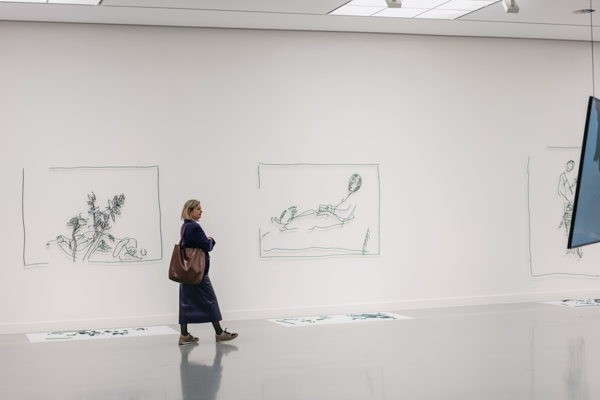
Émilie Terlinden’s Timelapse at Botanique reimagines how the public sees and experience images, transforming them from familiar pictures into enigmatic visual forms. At the core of the exhibition is a monumental, immersive piece inspired by Daguerre’s diorama, an early nineteenth-century visual device that played with light and perception at the dawn of photography and pre-cinema.

Terlinden’s artistic process starts long before paint touches canvas: she physically cuts, folds and fragments existing images, distancing them from their original context and turning them into raw material for new compositions. Drawn from sources as varied as European painting and everyday life, these fragments are then recomposed and painted into dense arrangements where classical references meet contemporary forms, from still life echoes to Baroque richness.
Ghita Remy, Mythica, until 22 March, Botanique, Brussels
Another opening at Botanique is Ghita Remy’s Mythica which delves into the living power of myth, showing how stories from the past constantly morph and resurface in the present. Drawing on ancient symbols, archaic imagery and the imaginary creatures born from fossil discoveries, her work blurs the boundary between fact and fantasy, questioning the common knowledge about history and instead changing it into a landscape of shifting narratives.

Central to her exploration is the legendary figure of the vagina dentata, a universal myth that embodies fear and desire, attraction and threat. Through sculptures and forms that seem part archaeological relic, part speculative fiction, Remy invites the public to consider how objects carry layered meanings: fossil-objects, fantasy-objects and archetypes that reveal a hidden collective unconscious.
Ongoing events
Antwerp
Early Gaze: Unseen Photography from the 19th Century
Danial Shah: Becoming, Belonging and Vanishing
Magritte: La ligne de vie
Brussels
Loisirs-Plezier: Brussels 1920-1940
Fire
Ghent
Fairground Wonders
Marc De Blieck: Point de voir
Monique Gies: Inside Views
Hasselt
Rococo Reboot
Michael Beutler
Sint-Martens Latem
Edith Dekyndt
(MOH)
#FlandersNewsService | © PHOTO MAISANT LUDOVIC / HEMIS VIA AFP
Related news