Cultural Compass: Picture Perfect, four new photo exhibitions and the power of women

Every Sunday, Belga English picks its favourite events from the cultural agenda. This week: Bozar continues its exploration of beauty standards through a contemporary lens, FOMU debuts four new photo exhibitions with a range of subjects, and KU Leuven celebrates the role of women over the last century.
Picture Perfect, until 16 August, Bozar, Brussels
What does it mean to be beautiful today, and who gets to decide? With Picture Perfect: Beauty Through a Contemporary Lens, Bozar invites visitors to rethink one of the most persistent and powerful ideas shaping modern life.
Bringing together works by 65 artists from around the world, the exhibition explores how photography, film and video have shaped and challenged society’s understanding of beauty from the 1970s to the present.

In an age of filters, selfies and constant visual comparison, the pressure to look “picture perfect” has never been stronger. Photography has played a crucial role in this process, helping to spread aesthetic trends and reinforce narrow ideals of youth, perfection and desirability. Yet the same medium has also become a powerful tool of resistance.
Through self-portraiture, performance and documentary approaches, many artists use the camera to question these standards and reclaim the image on their own terms.
Running alongside Bellezza e Bruttezza, Bozar’s exhibition on beauty and ugliness in Renaissance art, Picture Perfect offers a contemporary perspective on the same theme. While the Renaissance show traces how classical ideas of harmony and perfection were established in European art, Picture Perfect considers how those ideals continue to shape modern visual culture.
Moving between critique and possibility, the exhibition brings together artists who dismantle inherited standards and others who imagine beauty as fluid, diverse and deeply human. Themes of ageing, vulnerability, queer identity and hybridity emerge as new visual languages celebrate complexity rather than perfection.
Four new photo exhibitions, 20 March - ongoing, FOMU, Antwerp
Four new exhibitions are coming to Fotomuseum Antwerpen (FOMU), each offering a different perspective on photography’s power to shape identity, memory and social narratives.
The Heart of the Matter, Carrie Mae Weems
In this major retrospective, American artist Carrie Mae Weems examines the intertwined themes of race, gender, power and historical memory through photography and video. Often placing herself within the frame as subject, narrator or witness, Weems uses personal storytelling to reveal broader social truths.
.jpg)
Her work moves between intimate and monumental settings, from kitchen tables to churches and former plantations. These environments become stages where forgotten histories and hidden narratives are brought into view.
The exhibition includes more than 100 works, featuring landmark series such as Kitchen Table Series alongside more recent projects. Together they demonstrate how Weems blends autobiography, performance and documentary strategies to question how history is written and who is represented within it.
IF REVOLUTION IS A SICKNESS, Diane Severin Nguyen
In her visually striking installation, Diane Severin Nguyen blends the glossy aesthetics of pop culture with sharp political reflection. Drawing on the language of music videos and performance, she creates an immersive environment that is both seductive and unsettling.
_scr.jpg)
The work centres on a young Vietnamese-Polish girl in Warsaw navigating questions of identity, belonging and political expectation. Through imagery inspired by K-pop and youth culture, Nguyen explores how nationalism and global media shape the way people understand themselves.
The installation unfolds like a coming-of-age narrative, but beneath its vibrant surface lies a deeper inquiry: what does revolution mean today? By juxtaposing catchy visual spectacle with critical themes, Nguyen reflects on the pressures facing a generation growing up in a world defined by political tension and identities.
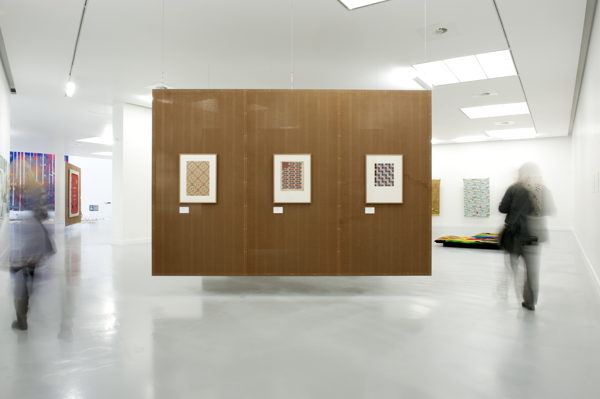
Photography has long been a way of preserving personal history. The exhibition Families revisits this familiar territory while questioning the assumptions behind the traditional family portrait. Drawing from the museum’s extensive collection, the exhibition brings together historical albums and contemporary artworks that explore the many ways families are represented and imagined.
Rather than presenting a single definition, the works reveal family as something fluid, complex and sometimes contradictory.

Artists such as Diane Arbus, Henri Cartier-Bresson and Sunil Gupta appear alongside contemporary photographers who question the boundaries of kinship and belonging. The exhibition becomes a dialogue between past and present, highlighting how photographs shape collective memory while also leaving space to reconsider what family means today.
Tenderly There, Tashattot Collective
Curated by the Brussels-based Tashattot Collective, Tenderly There focuses on representations of queer intimacy within the SWANA region, Southwest Asia and North Africa. Through photography and archival material, the exhibition traces how everyday gestures of affection, companionship and presence have been documented across time.
The exhibition presents historical images from the Arab Image Foundation alongside contemporary works by artists such as Kader Attia and the duo Lara Tabet and Randa Mirza. This dialogue between past and present reveals how visual culture can preserve fragile histories of queer life while also opening new spaces for visibility and community.
Strong Women, until 3 May, KU Leuven
At KU Leuven, two exhibitions open side by side, offering complementary perspectives on women’s roles in society both in the past and present.
ReIncluGen: Rethinking Inclusion and Gender Empowerment focuses on the experiences of women and girls with a migration background. Developed as part of an international research project, the exhibition brings together photographs from a competition and a “photovoice” study involving participants in Belgium, Austria, Italy, Spain and Poland.
Using photography as a participatory tool, the project invited women to document and reflect on their daily realities, creating space for personal stories about identity, belonging and empowerment. Fashion also plays a role in the exhibition: stylist Sana Barghouti presents a series of garments inspired by the stories of Belgian participants, including one created with volunteers from the Empact sewing group.

The second exhibition, From the Kitchen to the World: Women in International Catholic Organizations, looks back to the decades after the Second World War, when Catholic laywomen began carving out influential roles on the international stage.
Travelling widely and working with institutions such as the Vatican and the United Nations, these women advocated for development, social progress and women’s rights across the West and the Global South. At the centre of the story is Christine de Hemptinne, a Ghent-born aristocrat whose extensive archive sheds light on a largely overlooked network of Catholic women balancing global engagement with the enduring ideal of the homemaker.
Ongoing events
Antwerp
The Fall of Alba’s Citadel
Danial Shah: Becoming, Belonging and Vanishing
we refuse_d
Brussels
Bellezza e Bruttezza
Timelapse
ROTONDE
Becoming Ancestors
Loisirs-Plezier: Brussels 1920-1940
Ghent
Fairground Wonders
Marc De Blieck: Point de voir
Monique Gies: Inside Views
Hasselt
Rococo Reboot
Withering into Breath, Wetness Undoes Itself
Ostend
Evenepoel/Ensor
Sint-Martens Latem
Edith Dekyndt
(MOH)
#FlandersNewsService | Be Nice To Me (Flatten 04) from Open My Glade (Flatten), 2000, video installation by Pipilotti Rist (video still) © Pipilotti Rist / 2025, SABAM Courtesy the artist, Hauser & Wirth and Luhring Augustine
Related news