Cultural Compass: Cello takes centre stage, Antwerp galleries open their doors and wartime art
%20Thomas%20Le%CC%81onard%20(5).JPG)
Every Sunday, Belga English picks its favourite events from the cultural agenda. This week: Cellos take the stage in the 75th anniversary of The Queen Elisabeth competition, Antwerp Art Weekend stretches across 88 venues and the Permekemuseum displays art from Constant Permeke’s time in Britain.
The Queen Elisabeth Competition for Cello, until 10 June, Flagey, Brussels
Every May, Belgium’s classical music world narrows its focus to one event: the Queen Elisabeth Competition. This year’s edition promises to be particularly charged with significance, as the prestigious competition celebrates its 75th anniversary while dedicating itself to the cello.

Only the third cello edition since the category was introduced in 2017, the competition also coincides with the 150th birthdays of Queen Elisabeth of Belgium and legendary Catalan cellist Pablo Casals, whose friendship helped shape the instrument’s place within Belgium’s musical life.
The coming weeks will see 64 young cellists from more than 20 countries compete through the competition’s famously demanding elimination rounds. The semi-finals will introduce a world premiere: Caffeine by Belgian composer Harold Noben, while finalists will later prepare another compulsory contemporary work in near-total isolation at the Queen Elisabeth Music Chapel.
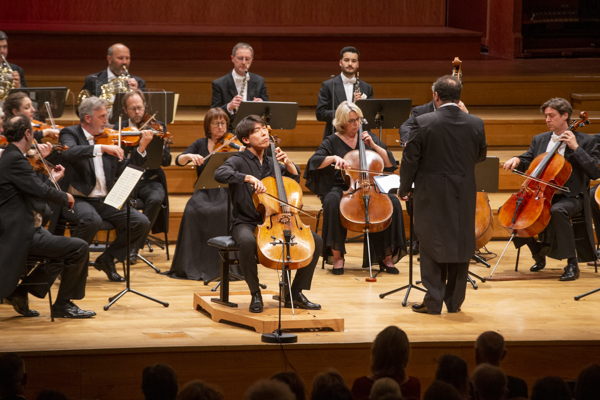

The final week, accompanied by the Belgian National Orchestra under conductor Antony Hermus, is expected to offer both technical brilliance and emotional intensity. For many audiences, that unpredictability is precisely what makes the competition so compelling: careers can change overnight, and unknown musicians suddenly emerge as major international talents.
Adding to the symbolism this year, the winner will win the use of Pablo Casals’ historic 1733 Goffriller cello, an instrument that carries both extraordinary sound and musical history.
Antwerp Art Weekend, 14-17 May, Antwerp
For four days in May, Antwerp Art Weekend once again turns the city into a sprawling map of contemporary art, with exhibitions, performances and installations unfolding in galleries, museums, artist-run spaces and unexpected architectural settings. Now in its 12th edition, the event continues to distinguish itself less as a conventional art fair than as a city-wide exploration of how artists respond to the world around them.
This year’s programme stretches across 88 venues and places a strong emphasis on emerging talent and experimentation. Young artists are given particular visibility through the Antwerp Art Graduation Prize exhibition at M HKA, where recent graduates Charlotte Daniëlse and Marta Meers present new work. Elsewhere, spaces such as Het Bos and MINO ART SPACE foreground younger voices and artists often underrepresented in traditional institutions.

Many of the most compelling projects engage directly with political and social questions. At Kunsthal Extra City, Congolese artist Sammy Baloji examines the lasting consequences of colonial exploitation through tapestries and sound installations. Meanwhile, at Annie Gentils Gallery, Stefaan Dheedene’s VERY VERY HUSH HUSH transforms fragments of BBC crisis-management broadcasts into an unsettling contemporary sound fiction.
A defining feature of Antwerp Art Weekend remains its use of unusual spaces. Former courthouses, basements, brutalist buildings and even a residential barge become temporary exhibition venues. Particularly striking is the transformation of the former Seamen’s House by Club Zee and FAAR, while TICK TACK stages a sculptural intervention inside Léon Stynen’s brutalist De Zonnewijzer building.
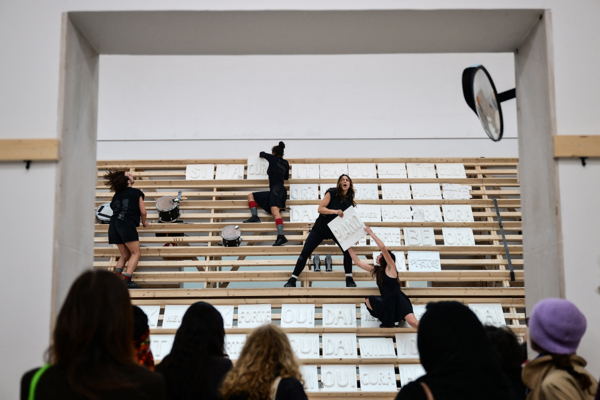
Alongside large-scale exhibitions, the programme also makes room for intimacy and participation. Visitors are invited to contribute stickers to FAAR’s collective installation Sticky Fingers, while the exhibition être humain brings together works by 79-year-old Albert Pepermans and 11-year-old Felix Franssens in a dialogue across generations.
Constant Permeke: The English Years (1914-1919), until 15 November, Permekemuseum, Jabbeke
Constant Permeke’s years in wartime England take centre stage in a new exhibition at the Permekemuseum, tracing the formative period in which the artist developed the visual language that would later define his work.
This new exhibition follows the painter from his arrival in Britain after being seriously wounded while defending Antwerp during the First World War. Initially confined to a small cottage in the Wiltshire village of Stanton Saint-Bernard, Permeke worked with limited materials, producing intimate watercolours of domestic life, his family and the surrounding countryside.

As his health improved, his work expanded in scale and intensity. In the rural village of Chardstock and later in Sidford on the English coast, Permeke became increasingly absorbed by the vast rolling landscapes around him. The exhibition reveals a striking artistic evolution: from restrained rural scenes in muted greens to expressive, almost abstract compositions in fiery reds and yellows, applied with thick layers of oil paint.
Although largely isolated from British artistic circles, Permeke remained in contact with fellow Belgian artists in exile, including Gustave Van de Woestijne and Gustave De Smet, who kept him informed of developments in Cubism and German Expressionism.
Alongside the artworks, newly uncovered archival research sheds fresh light on Permeke’s years in exile, his exhibitions and his artistic network during the war.
The Tower of Babel, until 8 June, Museum De Reede, Antwerp
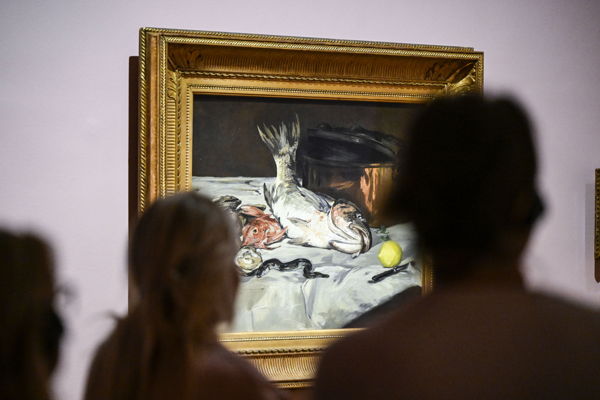
Three exhibitions at Museum De Reede explore imagination, mythology and the strange ways humans make sense of the world. A highlight is the international Tower of Babel project, inspired by Pieter Bruegel the Elder’s iconic painting. Divided into 342 fragments and reinterpreted by graphic artists from around the world, the monumental work transforms the Biblical story into a vibrant reflection on global interconnectedness and cultural diversity.

Spanish artist Maite Cascón delves into folklore, superstition and the subconscious through intricate etchings populated by mythical figures and symbolic archetypes, while Antwerp artist René De Coninck conjures dreamlike scenes suspended between surrealism and magical realism. Together, the exhibitions move between the playful and the unsettling, offering visitors a richly layered journey through collective memory, imagination and human psychology.
Ongoing events
Antwerp
The Fall of Alba’s Citadel until 17 May
we refuse_d until 7 June
The Antwerp Six until 17 January
Martial Arts until 29 November
Plantin’s Plants until 2 August
Mashid Mohadjerin: Drifting Belgians until 30 August
The Tower of Babel until 8 June
Bruges
The Whispering Walls Rêve
Inventing Obsessions until 19 June
Brussels
Bellezza e Bruttezza until 14 June
ROTONDE
Becoming Ancestors until 28 June
Collection Meets Spanish Artists until 16 August
Hasselt
Ludo Thys until 27 September
Before Our Eyes until 23 August
Kortrijk
Abby & Friends until 13 September
Leuven
Valérie Mannaerts: Antennae until 30 August
Sint-Martens Latem
Edith Dekyndt until 17 May
Jabbeke
Constant Permeke: The English Years (1914-1919) until 15 November
(MOH)
#FlandersNewsService | Queen Elisabeth Competition 2026 © PHOTO THOMAS LÉONARD
Related news