Climate change threatens to expose most Belgian homes to extreme heat

A new study by KU Leuven warns that global warming could have serious consequences for Belgian households, with a growing risk of homes overheating if policy remains unchanged and no immediate action is taken. The findings were presented on Tuesday by KU Leuven and Verozo, the professional association for manufacturers of sun protection and roller shutters.
The study examines the effects of the earliest plausible moments at which global warming could exceed the 2 and 3 degrees Celsius thresholds, estimated at 2039 and 2063 respectively. According to the researchers, such warming would have far-reaching consequences for homes and households in Belgium.
At present, homes in Belgium are rarely exposed to outdoor temperatures above 25 degrees Celsius for more than 40 days a year. With a 2-degree temperature increase by 2039, however, one in five homes could be exposed to extreme heat beyond this threshold. In a scenario with 3 degrees of warming, nine out of 10 homes would be affected.
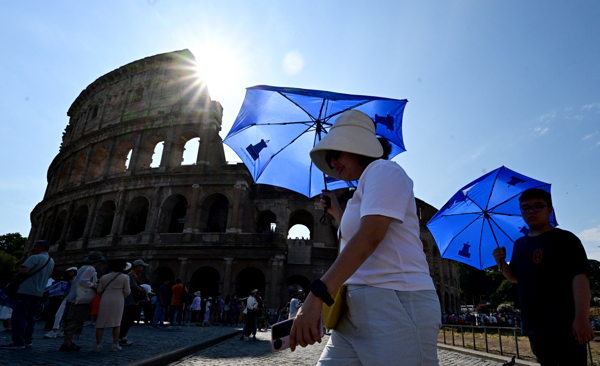

The impact of global warming on homes is not linear, the researchers stress. "Every additional tenth of a degree causes the number of homes exposed to extreme heat to grow disproportionately," said Nicole van Lipzig, professor of geography and climate scientist.
Passive cooling essential
If the models and projections prove correct, the majority of Belgian homes are neither future-proof nor climate-proof, the study finds. The researchers say, however, that a range of measures can help prevent overheating if action is taken in time. These include increasing natural shading through tree planting and designing buildings in a way that limits heat entering the home.
These passive strategies should be prioritised before active cooling systems, according to Joost Declercq, a civil engineer and architect at Archipelago Architects affiliated with UHasselt. "Active cooling increases peak demand on the electricity grid and contributes to additional warming of the outdoor environment," he says.
#FlandersNewsService | © BELGA PHOTO BRUNO FAHY
Related news