Blood transfusions fall by a third in 15 years

The number of blood transfusions per capita in Belgium has fallen by a third over the past 15 years, VRT reports, based on data from the Federal Agency for Medicines and Health Products. In 2011, 45.8 transfusions were administered per 1,000 inhabitants, compared with 31.5 in 2024.
Clinical studies show that a transfusion should only be considered in cases of very low haemoglobin levels in the blood. Haemoglobin is a protein found in red blood cells that carries oxygen from the lungs to the rest of the body. Doctors can wait longer than previously thought before administering additional blood, and can limit blood loss by better monitoring a patient’s coagulation levels during surgery.
According to Veerle Compernolle, a professor of clinical biology at UZ Gent, transfusions are now carried out in a more considered manner. “They save lives, but blood should only be administered when necessary,” she said. “Every medical intervention carries a risk of side effects, and if something isn’t necessary, it’s simply better not to do it.”
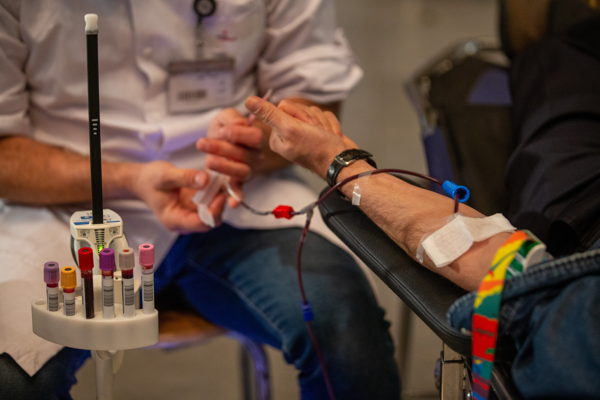

The decline doesn’t mean that blood donation is no longer necessary, and there is currently a critical shortage of O-negative blood. O-negative recipients can only receive blood from their own group, but their blood can be given to any other patient.
Anyone wishing to donate blood can visit a donor centre or attend a mobile collection. An appointment is required and can be booked online or by calling 0800 777 00 free of charge. People who lived in the UK for six months or longer between 1980 and 1996 are ineligible.
#FlandersNewsService | A blood collection campaign by the Red Cross Flanders in Bruges, May 2025 © BELGA PHOTO NICOLAS MAETERLINCK
Related news