Red Cross Flanders aims to cut reliance on US plasma

Red Cross Flanders is seeking to reduce Belgium’s dependence on the United States for blood plasma by significantly increasing domestic plasma donations. According to De Standaard, Belgium currently sources around half of its plasma supply from the US, despite having a stable overall blood supply.
The organisation hopes to reach a tipping point by 2028, when it expects to collect more plasma donations than traditional blood donations for the first time. The shift reflects growing global demand for plasma, which is used to produce life-saving medicines for patients with immune disorders, clotting problems and certain chronic conditions.
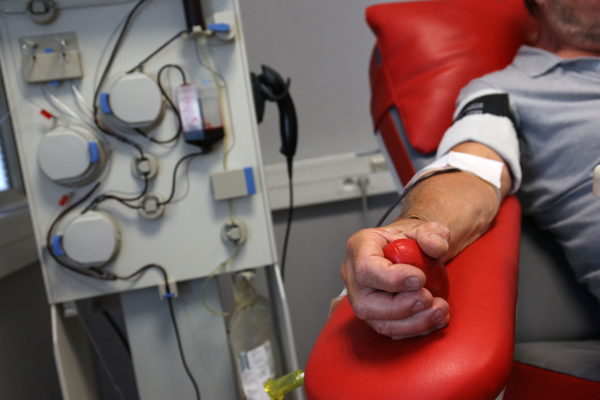
Plasma is the yellowish liquid component of blood, made up of more than 91.5 per cent water and 8.5 per cent proteins, sugars, fats, salts, hormones and vitamins. Unlike whole blood donation, plasma donation involves separating the plasma from the blood and returning the red blood cells to the donor. Because the body replenishes plasma more quickly, donors can give plasma every two weeks, compared with every two months for blood.
Red Cross Flanders argues that scaling up plasma collection is not a luxury but a necessity. Global demand for plasma-derived medicines continues to rise, driven in part by medical innovation and ageing populations. Increasing domestic supply would not only strengthen Belgium’s strategic autonomy in healthcare but also provide greater security in times of international disruption.
While Belgium’s blood reserves remain stable, the continued reliance on US plasma has prompted calls for greater self-sufficiency, a goal the organisation now hopes to achieve within the next few years.
#FlandersNewsService | Red Cross Flanders © BELGA PHOTO NICOLAS MAETERLINCK
Related news