Bird flu detected at West Flanders poultry farm as infection numbers rise

Avian influenza of the H5 type has been detected at a poultry farm in Deerlijk, West Flanders, the Federal Agency for the Safety of the Food Chain (FASFC) announced on Monday. It is the latest case at a Belgian poultry farm, as bird flu infections are on the rise.
According to the FASFC, the spread of avian influenza has intensified in recent weeks. Since the autumn of 2025, outbreaks have been recorded at twenty poultry farms and two hobby farms in Belgium. Numerous infections have also been detected in wild birds, while neighbouring countries are reporting a high number of cases as well.
To prevent further spread, Belgium requires infected farms to cull their poultry. All poultry farmers within a 10-kilometre radius of an outbreak must keep their animals isolated. Within a 3-kilometre zone, the same obligation applies to other birds.
The obligation to shelter poultry was also reintroduced in October to curb further outbreaks. The measure applies to all professional farmers and registered hobby keepers. Birds kept by private individuals do not have to be kept indoors, but must be fed and watered in a protected area.

Winter accelerates spread
"Avian influenza is a highly contagious viral disease to which almost all bird species are susceptible," explained FASFC spokesperson Hélène Bonte. "The severity of the disease varies from animal to animal and depends on the virus strain, the environment and any other infections. Infection can occur through direct contact with sick animals or contaminated material, such as manure or dirty crates."
This winter has been an especially severe bird flu season, according to the FASFC. "This type of virus thrives in cold weather," Bonte said. "The freezing temperatures and the large number of infections in neighbouring countries meant that the virus was able to spread quickly in Belgium too."
The agency stresses that infection in humans remains exceptional. To date, no human-to-human transmission has been observed worldwide. The FASFC continues to warn the public not to touch dead or sick birds.
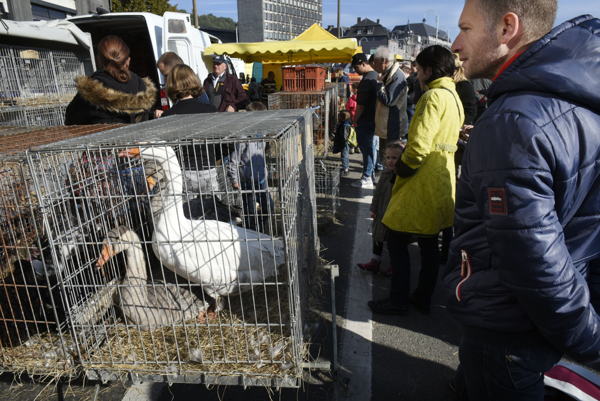
#FlandersNewsService | PHOTO © Jaime REINA / AFP
Related news