3 euro customs duty to be levied on small non-EU online deliveries from July

A temporary customs duty of 3 euros will apply to all e-commerce parcels from outside the EU with a value of less than 150 euros. The duty is a fixed amount and will be applied from 1 July, the Federal Public Service Finance has announced.
As international e-commerce continues to grow, imports of low-cost goods from third countries, particularly China, are increasing significantly. These products do not always comply with European standards relating to safety, health and the environment.
In addition, low-value consignments are placing a growing administrative burden on the customs services. According to the FPS Finance, the number of declarations has tripled in three years: from 395 million declarations in 2023 to 1.3 billion in 2025.
In the first quarter of 2026, there were more than 5 million declarations a day at Liège Airport, a 65 per cent increase year-on-year.
"We are seeing a huge increase in goods ordered online, hence the desire to create a level playing field with this tax"
“At present, it is impossible for Customs to check all parcels; the workload is too high,” said Kristian Vanderwaeren, director general of the Customs service. “We are seeing a huge increase in goods ordered online, hence the desire to create a level playing field with this three euro tax.”
Critics say this trend leads to unfair competition for European online shops and increases the risk of fraud, such as undervaluation, counterfeiting and non-compliant products. To tackle this, the European Commission decided in November to abolish the customs exemption for parcels worth less than 150 euros.

“This is a European tax that will be applied per tariff line, which means that each item in a different category will be subject to a flat-rate charge of three euros,” said Jamil Soltani, head of customs at Liège Airport, where the measure was presented on Tuesday.
“If you have eight different items in your parcel ordered online, this tax will amount to 24 euros in total. In some cases, the value of the tax will exceed the value of the parcel.”
Pending a structural technical solution, planned for mid-2028, the flat-rate duty is being introduced as a transitional measure.
The FPS Finance expects that in 95 per cent of cases, online retailers will automatically deduct the charges. Consumers will then pay the customs duty and VAT in advance. If online retailers do not do this, consumers will pay the customs duty, VAT and, where applicable, clearance charges levied by the carrier.
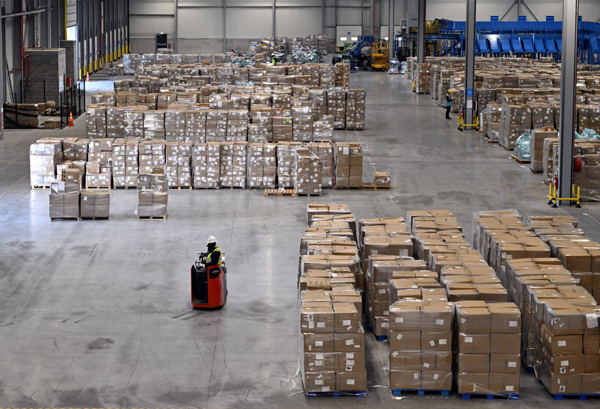
Customs agents check packages from China, September 2025 © JOHN THYS / AFP
Related news