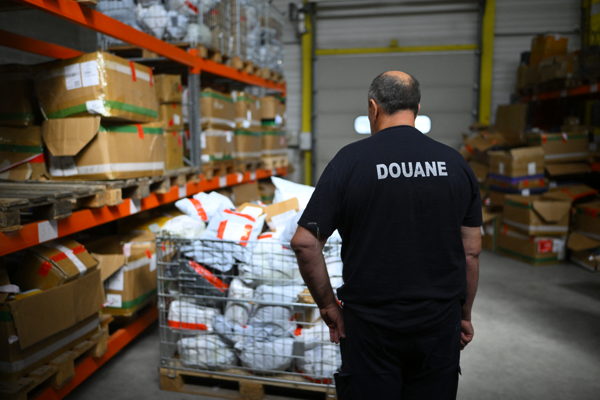
3 euro European parcel tax 'not enough' to tackle cheap imports

From 1 July, a 3 euro levy will apply to parcels worth less than 150 euros entering the European Union from non-EU countries. The measure is intended to address the sharp rise in low-value shipments ordered via online platforms.
Belgian trade unions and employers from the distribution and e-commerce sectors, represented in the Central Economic Council, say the new tax is a step in the right direction but will not be sufficient on its own.
"Without a smart control plan, it will be like mopping the floor with the tap running," the social partners warn.
Call for smarter controls
According to the group, a tax alone will not stem the flow of unsafe or undervalued goods entering the European market. Instead, they argue that enforcement must be strengthened through better coordination and modern technology.
They are calling for inspections to be made unavoidable, "through smart technology, digitally trained personnel, and enhanced cooperation between national control and inspection services and European authorities."
The social partners believe responsibility for collecting the three euro levy should lie entirely with sellers (namely, e-commerce platforms) rather than with transport or postal companies. "It's a transaction between seller and consumer, where the consumer must know in advance what they are paying,” the partners say.
They argue that making delivery firms responsible for collecting the charge would only add unnecessary complexity. "That will only complicate delivery."
Investing in modern customs systems
The revenue generated by the tax, they say, should be reinvested in properly inspecting the millions of parcels entering the EU each year. Simply recruiting additional customs officers will not be sufficient.
"Customs and inspection services need a state-of-the-art organisation with (digitally skilled) personnel, scanners, (verified data) software, and AI tools."
Among their proposals is the creation of a European data hub, the EU Customs Datahub, to centralise parcel flow information. They also advocate for a system capable of reading unique QR codes on parcels, enabling authorities to assess risk scores and conduct "highly targeted manual inspections" of suspicious shipments.
Greater automation would also make it easier to detect dangerous or non-compliant products, identify irregular manufacturing practices, and flag parcels whose declared value does not match their true worth.
"The example of Chinese customs, which operates at two speeds, such as a 'fast lane' and slow manual processing, can be inspiring in this context. It will also encourage consumers to purchase from platforms that comply with the regulations, as delivery speed is a crucial selection criterion."
Finally, the social partners propose the creation of a coordinated enforcement structure modelled on Belgium’s Social Intelligence and Investigation Service (SIOD), "to maximise synergies between customs, economic inspection and other services."
They also urge Belgium to engage diplomatically with major trading partners, including the United States, China and Turkey, to align the long-term application of European regulations and prevent future trade disputes.
© PHOTO ZHENG HUANSONG
Related news