Without measures, food production threatens to disappear from Belgium

The Belgian food industry is warning that food production could gradually shift abroad unless urgent measures are taken to improve competitiveness. In its annual report presented on Tuesday, Fevia, the federation representing the sector, pointed to stagnating domestic sales, rising cross-border purchases, growing competition from foreign products and geopolitical tensions as key threats facing the industry.
"If we do not intervene now, production threatens to disappear from Belgium," Fevia stated. Despite the concerns, the sector remains Belgium’s largest industrial branch, generating 85.1 billion euros in turnover, 42.4 billion euros in exports and supporting 102,779 jobs in 2025. "The food industry is the engine of Belgian industry," said Fevia CEO Ann Wurman during Tuesday’s presentation.
Domestic pressure and rising competition
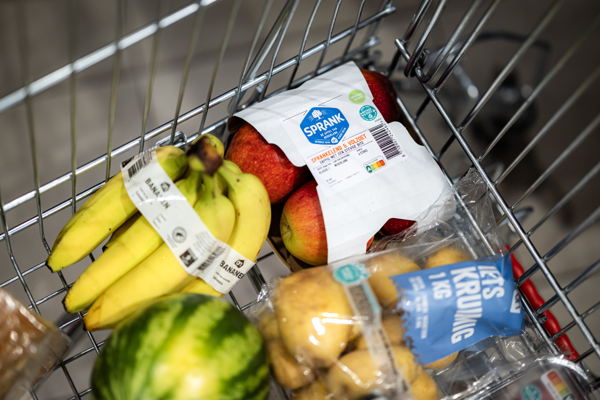
Behind these strong figures, however, Fevia sees growing structural challenges. Domestic sales are stagnating, while cross-border purchases remain high, reaching 708 million euros last year. At the same time, foreign products, particularly from the Netherlands, are gaining ground on Belgian shelves, with their presence doubling over the past fifteen years.
Internationally, growth is also slowing. Exports outside the European Union have stagnated, and momentum is weakening in key markets such as the United States. Meanwhile, geopolitical tensions, including the war in Ukraine and instability in the Middle East, are adding uncertainty and driving up costs.
"The conclusion is clear: without intervention, the anchoring of the food industry in Belgium will come under pressure. If the competitiveness of our companies declines further, production threatens to shift to countries where production is cheaper. With consequences for jobs, investments and the entire agri-food chain," Wurman said.
"Structural warning signal"
According to Fevia, the situation is not a temporary downturn but a "structural warning signal". A recent survey among its members shows that all food companies are affected. "Rising costs are not being passed on for the time being, and profitability is coming under severe pressure, impacting investments and jobs. The war in the Middle East and the geopolitical context are intensifying pressure on energy, transport, and packaging prices, raw materials and logistics. Companies are absorbing the shocks, but that is not sustainable in the medium term," Wurman warned.
Call for urgent measures
Fevia is calling for immediate action to safeguard the sector. "If we want to protect and anchor our Belgian food industry, we must act today, not tomorrow. Stimulate domestic demand by keeping food and beverages affordable and by not introducing a VAT increase. A VAT increase would further stimulate cross-border purchases," Wurman said.
The federation is also advocating lower packaging levies and excise duties, as well as the introduction of a fiscal framework for beverages. It warns that the current litter tax is a "sword of Damocles". "It is three to four times higher than in our neighbouring countries. That, too, is an additional tax and can further stimulate cross-border purchases. We want that litter tax to reach the level of our neighbouring countries," Wurman added.
Beyond fiscal measures, Fevia stresses the need for structural reforms. "Our wage costs are currently more than 23 per cent higher than the average in neighbouring countries. That is unsustainable. Therefore, ensure manageable wage costs through a targeted approach to wage indexation and maintain support for night and shift work," she said.
According to Wurman, these measures must be accompanied by affordable electricity prices, reduced administrative burdens and a level playing field. "Only in this way can companies continue to invest in Belgium. Without those guarantees, we risk production disappearing," she concluded.
© BELGA PHOTO MICHEL KRAKOWSKI
Related news