What changes in Belgium from 1 May: prisons, museums and trade

As is customary, a number of policy changes take effect in Belgium on 1 May, the Labour Day holiday. This year, changes range from prison policy to museum pricing, while a major international trade agreement will also begin to take effect.
Drug testing introduced in prisons
From 1 May, detainees in Belgian prisons can be required to undergo drug testing. Justice minister Annelies Verlinden (CD&V) pointed to the “persistent problem” that drug use poses within the prison system. Mandatory drug tests will strengthen “the safety, health, and reintegration opportunities of detainees,” she said.
Tests may be carried out in a targeted way, based on individual indications, or randomly to create a deterrent effect. They will be conducted using saliva or urine samples. While physical coercion is excluded, refusal is considered equivalent to a positive result.
If a detainee tests positive, he or she is immediately referred by medical and psychosocial services for possible acute care and a treatment plan, followed by a repeat test. In the event of a positive result, fraud or refusal, a sanction may also be imposed.
Verlinden plans to extend the measure to transition houses, where detainees reside in the final phase of their sentence, as drug use has also been observed there. For the minister, the measure is “an important step towards drug-free prisons and towards adequate sentence execution, in which order, care, and reintegration go hand in hand.”
New pricing system for federal museums
Starting on 1 May, visitors to federal museums will benefit from harmonised preferential rates, while institutions will also gain greater autonomy over their pricing. Until now, rules on free admission and discounts varied between museums, but the new system aims to standardise access.
“Access to our scientific and cultural heritage should not depend on the location one visits, but must be guaranteed for everyone in a clear and fair manner,” said Vanessa Matz (Les Engagés). “We are putting an end to unjustified differences and reinforcing a simple principle: everyone must have access to our heritage under the same conditions.”
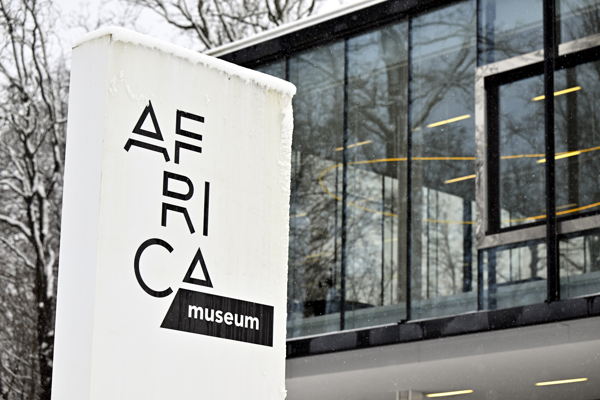

Under the new rules, certain groups, including children under three, people with disabilities and an accompanying person, teachers and journalists, will be granted free entry upon presentation of proof. Reduced rates will apply to young people under 25 (60 per cent), those over 65 (25 per cent), and jobseekers and people receiving increased benefits (60 per cent).
In addition, entry will be free for all visitors on the first Wednesday of each month from 1 p.m., with the exception of the Planetarium.
At the same time, museums will be able to set their own standard ticket prices, replacing the previous system in which tariff changes required a ministerial decree. As a result, many institutions are expected to raise their base prices.
EU–Mercosur trade deal takes effect
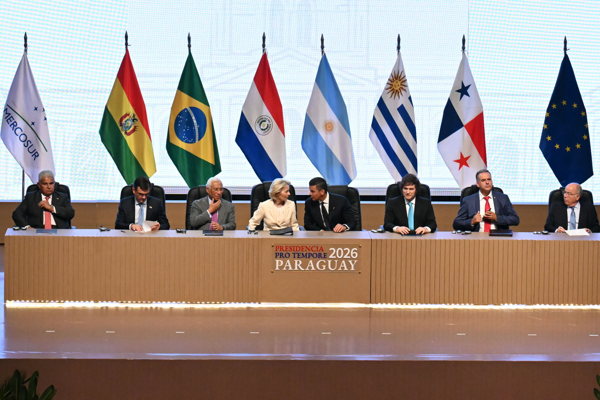
Beyond Belgium, 1 May will also mark the provisional entry into force of the EU–Mercosur free trade agreement, creating one of the world’s largest trade zones, covering around 30 per cent of global GDP and more than 700 million consumers.
The agreement between the European Union and Mercosur countries — Brazil, Argentina, Uruguay and Paraguay — aims to boost European exports of cars, machinery, wine and spirits, while facilitating imports of South American agricultural products such as beef, poultry and soy.
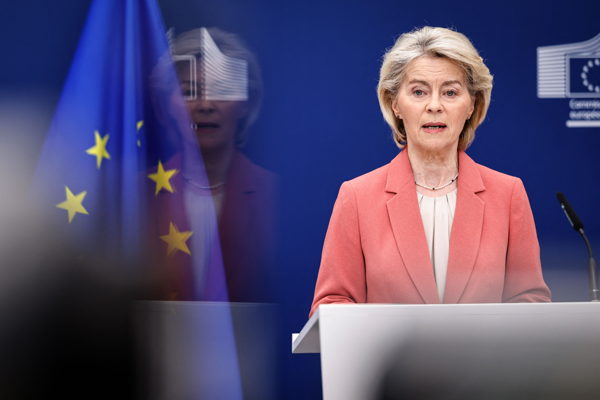

However, the deal remains controversial, particularly among European farmers who fear unfair competition. Several member states, including France and Poland, have voiced opposition, and the European Parliament has yet to give its final approval after requesting a legal review.
Despite this, the European Commission opted to allow the agreement to enter into force provisionally from 1 May, arguing that sufficient safeguards for the agricultural sector are in place.
The Belgian Federal Parliament in Brussels © BELGA PHOTO HATIM KAGHAT
Related news