War Heritage Institute takes teenagers on educational visit to Auschwitz

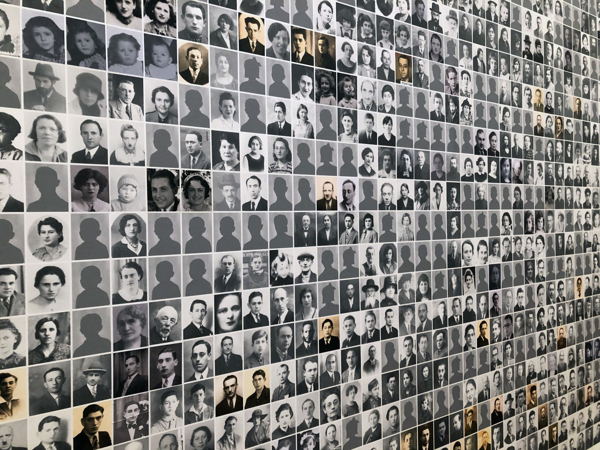
About 150 Belgian teenagers from 12 schools across the country visited the former Auschwitz-Birkenau Nazi extermination camp this week. The War Heritage Institute (WHI), the heritage branch of Defence, organised the remembrance trip.
The pupils flew on a Defence MRTT aircraft from Melsbroek military airport to Krakow on Thursday. The guided tour of the site was followed by a ceremony honouring the more than 1 million people murdered at the camp.
Defence minister Theo Francken took part in the visit with his daughter. “At a time of increasing geopolitical tensions, wars and conflicts, it is crucial to remember that peace is the most precious good we have and war is the most terrible thing that can happen to man,” he said.
“Europe has produced great things, but also some deeply blackened pages that we must not hide. Especially as antisemitism is once again skyrocketing, it is important to reflect on where hatred of Jews can ultimately lead.”
The WHI has been organising the visit for 20 years. Groups are usually accompanied by Simon Gronowski, a Belgian Holocaust survivor and human rights campaigner, but the 94-year-old was unable to join this year for health reasons.
"Especially as antisemitism is once again skyrocketing, it is important to reflect on where hatred of Jews can ultimately lead"
The pupils, in the final year of secondary school, found the experience moving. “It’s just terrible. There were many details I didn’t know yet, such as the fact that homosexuals had to wear a pink triangle,” said Duncan, a pupil at the Saint-Angela Institute in Tildonk. “That touches me deeply because I’m gay myself. I’ll remember that this is one of the darkest periods in our history.”


He called for vigilance to prevent such atrocities from happening again. “What is currently happening in the United States with ICE bears similarities – on a much smaller scale, of course – but there too, I fear it could escalate. It feels like we’re seeing the same mechanisms re-emerging, yet we are blind to them.”
Some 1.1 million people, mostly Jews, were murdered in the gas chambers at Auschwitz during World War II, by starvation or forced labour. Around 25,000 Jews and 350 Roma people were transported there from Belgium; 23,000 of them were killed at the camp.
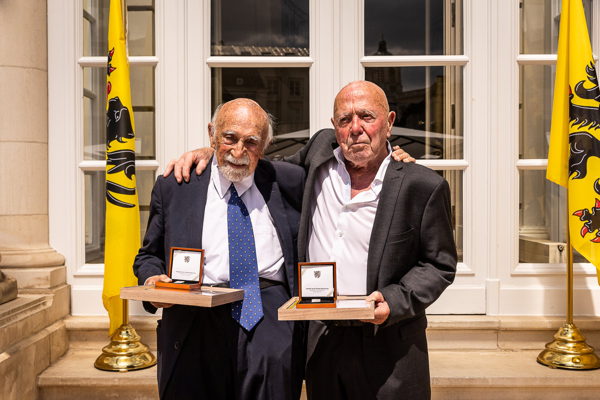

Gronowski’s mother and sister were among the victims, but he escaped when the train he was being transported on was intercepted by members of the Belgian resistance.
Francken sees horror and war today that reminds him of Nazi practices. “It certainly still happens, not on this scale I hope, but there are certainly still degrading practices organised in a rational way, to humiliate, dehumanise and eventually kill certain people,” he said.
“I would not want to be a Ukrainian prisoner of war in a dungeon in Russia, nor a protester against the ayatollahs and mullahs in Tehran, nor a Uighur in China.”
© BELGA PHOTO / VIDEO MAARTEN WEYNANTS
Related news