US suspends immigration applications from 19 countries

The Trump administration has suspended all immigration applications from 19 countries considered high-risk, according to the US Department of Homeland Security (DHS). The decision comes days after a deadly shooting in Washington involving an Afghan national.
The measure applies to people from the 12 countries whose citizens have been banned from travelling to the United States since June, as well as to citizens of seven other countries.
The application freeze affects green-card applications from Afghanistan, Chad, Congo, Equatorial Guinea, Eritrea, Haiti, Iran, Libya, Myanmar, Somalia, Sudan and Yemen, as well as seven additional countries: Burundi, Cuba, Laos, Sierra Leone, Togo, Turkmenistan and Venezuela.
DHS secretary Kristi Noem said the administration was pursuing “a full travel ban on every damn country that's been flooding our nation with killers, leeches, and entitlement junkies”.
Since January, roughly 80,000 visas have reportedly been revoked under the administration, which is simultaneously deploying agents from ICE and the National Guard to crack down on illegal immigration.

Meanwhile, the European Union is moving away from blanket bans and instead tying migration policy to trade and cooperation mechanisms. On 1 December, EU negotiators struck a provisional deal to revise the Generalised Scheme of Preferences (GSP), the bloc’s longstanding mechanism granting reduced or zero tariffs to developing countries.
Under the revised regime, beneficiary countries must now cooperate on the readmission of their nationals illegally present in the EU, or risk losing their trade privileges.
This major shift in trade access is now conditional not only on human rights and environmental standards, but also explicitly on migration cooperation. The new readmission clause will be enforceable from 1 January 2027.
Whether the EU’s strategy will prove effective remains to be seen. Critics warn that linking trade benefits to migration cooperation may amount to pressure or “blackmail” on poorer countries.
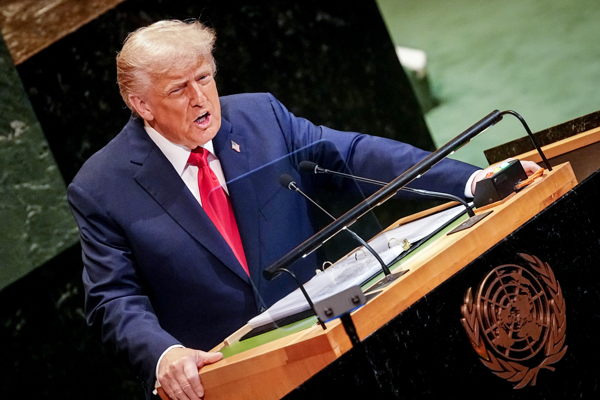
US president Donald Trump and secretary of homeland security Kristi Noem © PHOTO FRANCIS CHUNG - POOL VIA CNP VIA ZUMA PRESS WIRE
Related news