Soldiers join police to patrol Brussels’ public transport

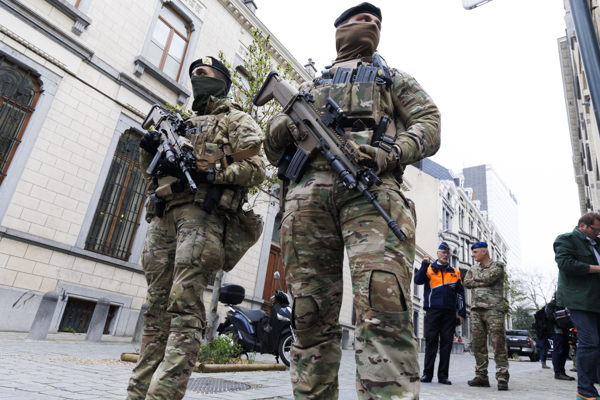
From Friday, soldiers will again patrol Brussels’ metro and train stations, years after this became a familiar sight in the wake of terrorist attacks in Paris and Brussels in 2015 and 2016. The patrols will initially involve 45 full-time equivalents from the ministry of Defence, who will be deployed alongside police officers.
There will then be a gradual increase in numbers as the system is rolled out, Interior minister Bernard Quintin told Bel RTL radio.
Initially, only police will have the authority to carry out, for example, identity checks. Soldiers will act in support, by bolstering patrols and protecting police officers on duty. The joint patrols are under the authority of the police.
“We are currently working on the basis of a protocol for Antwerp and a protocol for Brussels, in addition to Article 111 of the Integrated Police Act, which has allowed military personnel to be deployed for static protection in certain locations,” Quintin said.
At the same time, the government is working on a new code, intended to specify how the military might intervene in future.
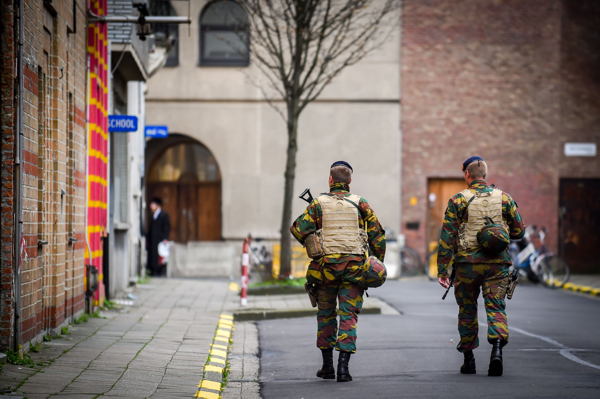

Train and metro stations “are hotspots for insecurity and high-traffic areas”, Quintin said. “We will be there to demonstrate that we are working to ensure the safety of all our citizens and those who come to visit our country.”
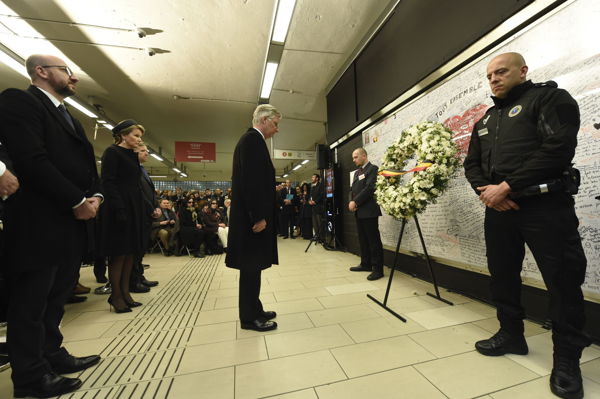
Thirty-six people were killed in March 2016 when suicide bombers attacked Brussels Airport and Maelbeek metro station.
Last month, the ministry of Defence announced that it would deploy soldiers to defend sites linked to the Jewish community in Belgium. The decision followed an explosion at a synagogue in Liège and similar incidents in Norway and the Netherlands.
A soldier and police officer outside Brussels Central station after the terrorist attacks in Brussels of 22 March 2016 © EMMANUEL DUNAND / AFP
Related news