Senate takes new step towards own abolition, core cabinet rejects cap on energy prices

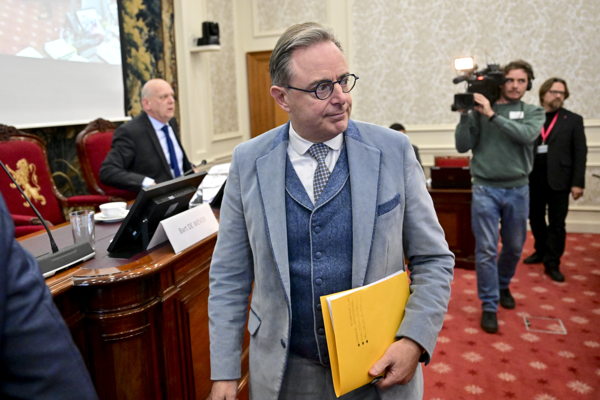
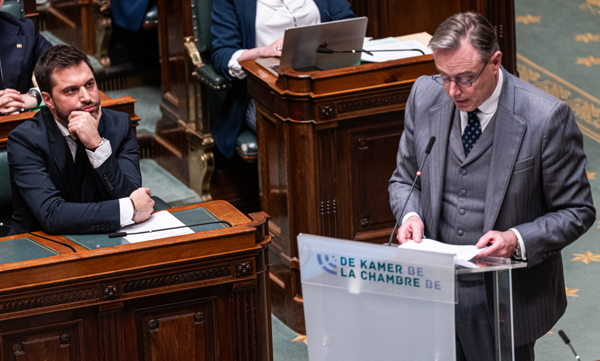
Following a lengthy debate, the Senate has taken a new step towards its own abolition. Remarkably, the governing party MR abstained from the vote and, moreover, requested an adjournment just before the vote. Some link these manoeuvres by the MR to the federal core cabinet, where the MR called for measures to bring down fuel prices at the pump. At the cabinet meeting, the government did not approve that request, but did decide to prepare support for vulnerable groups.
On Friday, the Senate plenary approved the proposal to amend Article 195 of the Constitution, meaning the Senate could be abolished during this legislative term. The vote was 36 in favour, 8 against and 14 abstentions. This hurdle has therefore been cleared, but several more rounds of voting lie ahead.
The votes in favour came from the N-VA, Vooruit, CD&V, Vlaams Belang, Eva Platteau (Groen) and four members of Les Engagés. The votes against came from the PS, Liese Scholzen (MR), Celia Groothedde (Groen) and Hajib El Hajjaji (Ecolo). The abstentions were from the MR, PVDA-PTB and Anne-Catherine Goffinet (Les Engagés).
It was notable that the MR abstained and, moreover, that the party requested an adjournment just before the vote, to the surprise of the other parties. When the president of the Senate did not immediately agree to the request for adjournment, the MR left the chamber. The party remained away longer than planned, but the MR senators eventually took their seats again, allowing the vote to proceed.

After the vote, CD&V and Vooruit reacted very sharply to the stance of their coalition partner, the MR. “We voted with Vooruit in line with our programme and the coalition agreement, namely in favour of abolishing the Senate. What the MR has done shows once again that they are an unreliable partner. This is regrettable because the coalition agreement is not a list of choices,” said parliamentary group leader Kris Verduyckt of Vooruit.
Some link the MR’s manoeuvres to Friday evening’s federal core cabinet meeting, where the party called for measures to reduce fuel prices at the pump via a fiscal mechanism whereby fuel excise duties fall when prices at the pump exceed a certain ceiling. The federal government ultimately did not approve the MR’s request.

However, the government is examining the budgetary impact of the higher prices on government revenue: according to experts, the higher VAT on fuel is entirely offset by higher costs, but the MR estimates that the state will generate an additional 60 million euros in revenue. A “complete and substantiated picture” of this is expected to be presented to the Council of Ministers on 17 April.
At the same time, the government is preparing support for two target groups by that date: the most vulnerable households that heat their homes with fossil fuels and employees who use their own cars for commuting. These measures must, however, be temporary and expire automatically.
Energy minister Mathieu Bihet of the MR must also prepare measures to limit energy consumption, such as mandatory remote working or a lower speed limit on motorways. Bihet must also work on the tendering process for additional offshore wind energy and on maintaining nuclear capacity to the maximum extent possible.
Plenary session of the Senate at the Federal Parliament © BELGA PHOTO NICOLAS MAETERLINCK