Security services: Women returning from IS camps appear to renounce extremism

Belgian women who have returned from Islamic State camps in Syria and Iraq appear to have renounced extremist ideology, according to Belgium’s security services. None of the 58 women who have returned seem to be considering terrorism or other acts of violence, the head of CUTA told VRT.
A feared worst-case scenario has not materialised following the departure of 112 women between 2012 and 2015 to join the terrorist group IS. “We are now fairly certain that virtually all of these women are on the right path,” Gert Vercauteren said on the Women of IS podcast.
The repatriation of Belgian women and their children from Syrian camps led to social and political debates in 2021. Following earlier terrorist attacks in Paris and Brussels, there were fears that returnees would use their extremist beliefs or acquired expertise in Belgium.
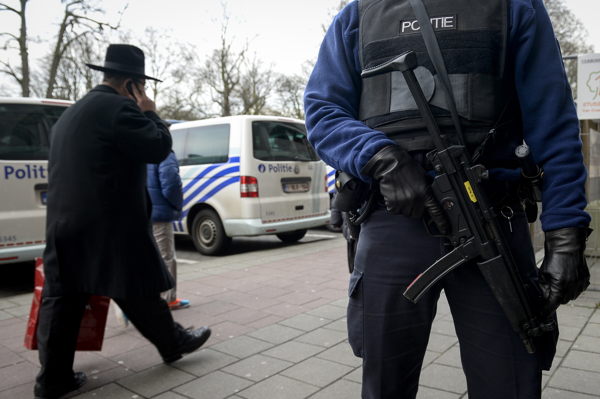
“That concern was justified at the time,” Vercauteren said. “In 2014, we did indeed see operatives returning to carry out attacks in the West, such as at the Jewish Museum in Brussels.”
"We are now fairly certain that virtually all of these women are on the right path"
Four people were killed in the shooting in May 2014: a Belgian employee of the museum, an Israeli couple on holiday and a French visitor. It was the first attack by Islamic State in Europe. The perpetrator was jailed for life.
Some 500 people left Belgium for Syria and Iraq between 2012 and 2014. Based on population size, that figure was among the highest in Europe.

The roots of their radicalisation lay at home, particularly with Sharia4Belgium, a terrorist group active since 2010. The movement rejected the democratic values of Western society and called for Belgium to be turned into an Islamic state.
This week, the Brussels Court of Appeal ordered the Belgian state to enable a Belgian mother and her 10-year-old daughter, who are detained in the al-Roj camp in Syria, to return to Belgium.
Local authorities are involved in prevention measures when a person convicted of terrorism moves into their area. “The mayor is given an information sheet so that they can work with the relevant services. They then draw up a tailored plan for each individual,” Vercauteren said.
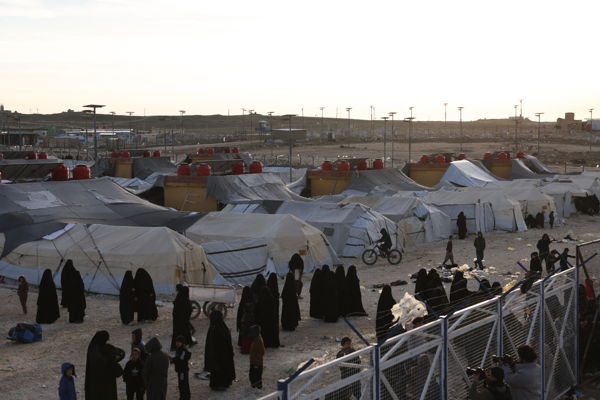
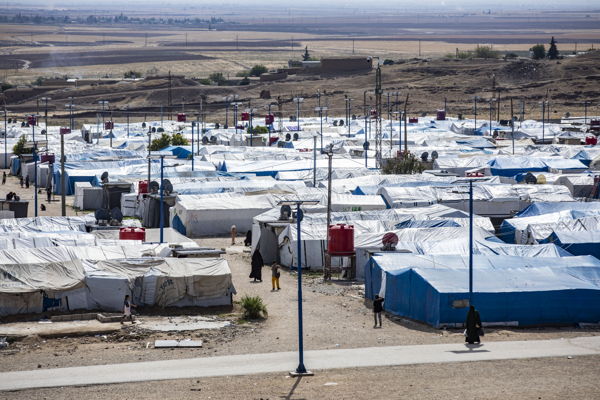
Women and children, relatives of suspected Islamic State jihadists, at Al-Hol camp in Syria, January 2026. The camp holds around 24,000 people, including 6,200 women and children of around 40 nationalities © PHOTO OMAR HAJ KADOUR / AFP
Related news