Rising drug-related violence in Belgium raises concerns over public safety

Belgium is experiencing a steady increase in violent incidents, many of which are linked to the growing drug trade. While the police are struggling to recruit qualified staff and the judiciary is facing growing workloads with limited resources, the number of violent incidents continues to increase.
In a report published in July 2025, the Flemish Peace Institute (Vlaams Vredesinstituut) recorded 184 incidents involving firearms in Belgium in 2024. In 65 per cent of cases, shots were fired. These incidents resulted in at least 20 deaths and 81 injuries. These figures are based on data from the Gun Violence Incident Monitor (GVIM), a project developed by the Flemish Peace Institute and the technology company Textgain at the request of the European Commission. The report identifies Brussels as the main hotspot for gun-related violence.
Drugs-related crime and market competition
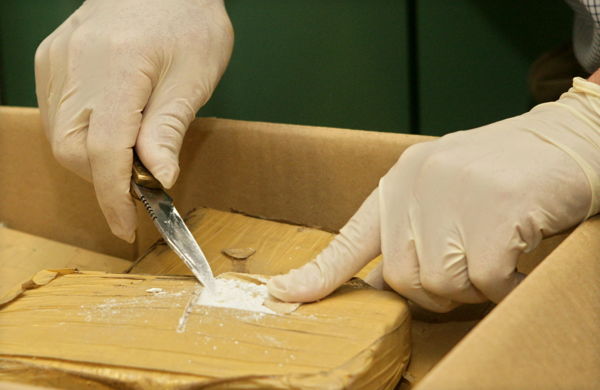
Alongside the Netherlands, Belgium has become one of Europe’s main hubs for the production, distribution, and transit of illicit drugs. Local production mainly focuses on cannabis and synthetic substances, while the Port of Antwerp serves as a major entry point for cocaine arriving from Latin America. From there, the drugs are distributed across the European market.
The Belgian drug market is highly competitive. The rising demand for cannabis, cocaine and MDMA has been accompanied by increased production and import volumes. This growth attracts new players looking to secure their share of the profits, intensifying competition and leading to increased violence.
Drug-related violence in Belgium can take many forms, from the firebombing of houses and shops to the targeted shooting of rivals in public areas. Both Antwerp and Brussels are at the centre of this escalation. In Antwerp, it is often property and commercial premises that are targeted, whereas in Brussels, shootings more frequently involve individuals.
Weapons availability
Belgium also has a long-standing reputation as a producer and exporter of firearms. It is home to the renowned manufacturer Fabrique Nationale de Herstal (FN Herstal). However, the country has also faced criticism for its involvement in the illicit firearms trade, often linked to the drug trade. The issue gained international attention in the 2010s when terrorist networks involved in attacks in France and Belgium were found to have obtained weapons from the illegal Belgian market.
Despite tightening gun legislation in 2006, Belgium continues to face challenges related to the availability and circulation of illegal firearms. The presence of such weapons, combined with demand from drug-related networks, contributes to the intensity and frequency of violent incidents. In addition to guns, hand grenades, pyrotechnic devices, and accelerants are sometimes employed for intimidation or retaliation in the context of drug-related crime.
Geographic expansion
While most incidents currently occur in Brussels, Antwerp and parts of Limburg, researchers are warning of a possible geographical expansion to other regions. The Flemish Peace Institute has emphasised that, if structural factors are not addressed, drug-related violence may spread beyond major cities.
The rising levels of violence coincide with ongoing pressure on the police and judiciary. Recruitment difficulties, limited budgets, and growing caseloads are making it increasingly challenging to respond effectively. Several local authorities have expressed concerns about their ability to contain the situation if current trends continue.
This article is part of a Belga English series offering insights into some of the most pressing challenges facing Belgium and Europe today. The series examines interconnected issues ranging from organised crime and public security to the pressures facing the police, the justice system, and the mental health sector. It also considers national developments within a broader European context.
#FlandersNewsService | The scene of an explosion in Antwerp © BELGA PHOTO NICOLAS MAETERLINCK
Related News