Rigid wage rules slow Belgian economic growth, National Bank says

Over the past year, the federal government has introduced several structural measures aimed at getting more people into work. The focus should now shift to stimulating sluggish productivity growth, according to the annual report by the National Bank of Belgium (NBB).
NBB governor Pierre Wunsch described the government's recent measures, particularly those targeting the unemployed and long-term sick, as "a step in the right direction". According to the report, Belgium's unemployment rate remained stable at 6.2 per cent, while the employment rate rose to 73.2 per cent. This is still below the European average and well under the 80 per cent target.
However, Belgium's centralised wage formation is one factor weighing on productivity, Wunsch noted. On one side is the country's wage norm, which caps wage increases, while automatic wage indexation establishes a lower limit. These measures reduce the agility of the country's economy, he said.
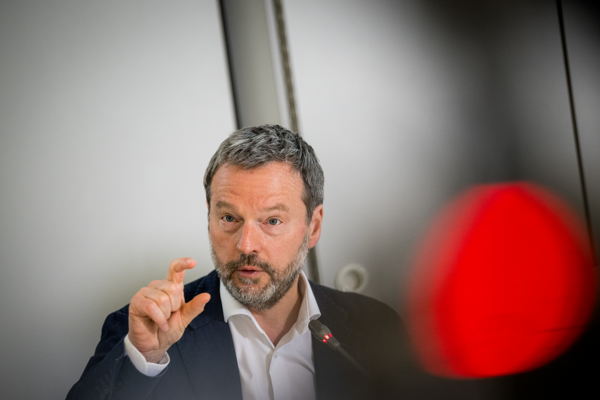

Companies should have more flexibility so that sectors performing well can offer higher wages, while struggling sectors can increase wages less, Wunsch argued. "I know this is a very sensitive subject, but it remains a factor that hinders [Belgium's] economic dynamism."
Centralised wage formation also suppresses labour market mobility. Belgium has the lowest wage inequality in the euro area, which limits shifts between low- and high-productivity jobs, companies or sectors. As a result, too few unsuccessful companies exit the market and too few successful start-ups grow. "Economic dynamics are too weak," Wunsch said.
Excessive regulation
The report further shows that the Belgian economy grew by around 1 per cent in 2025. Household consumption was the main driver of growth, followed by business investment outside industry and, to a lesser extent, government spending. For the second consecutive year, housing investment and net exports made a negative contribution.
Wunsch said this points to a "structural deterioration in Belgium's competitive position". Labour costs are not the main issue, the NBB notes, as the gap with neighbouring countries has nearly closed. Rather, it is the economy's rigidity that limits its ability to respond to changes, such as the adoption of artificial intelligence.
Regulation in Belgium is "relatively heavier" than elsewhere in Europe. Around 60 per cent of SMEs say regulatory or administrative requirements hinder growth, nearly twice the European average. "We need to restore the balance: more European integration, less regulation," Wunsch said.
© BELGA PHOTO BENOIT DOPPAGNE
Related news