Renewable sources supply nearly as much power as nuclear plants in Belgium

Solar energy production in Belgium rose by 21 per cent in 2025, reaching a record high. As a result of this remarkable increase, the share of renewable energy in Belgium's electricity mix is now almost as high as that of nuclear energy. Both account for around 34 per cent, show figures from high-voltage grid operator Elia.
The results in Elia's annual review are not yet final. They are based on data up to and including 22 December, supplemented by an estimate for the last nine days of the year. The final figures are expected in the first quarter of 2026.
The current data show that solar energy production increased by about a fifth in 2025. Total annual production is expected to reach a record high of 10.1 terawatt-hours. Elia notes that an absolute monthly record was also set in June 2025: 1,370 gigawatt-hours. The high-voltage grid operator attributes the figures to the expansion of installed capacity (+10 per cent), combined with an exceptionally sunny year. Weather conditions were less favourable for wind energy. Despite increased capacity, production was limited to 12.3 terawatt-hours (-2 per cent).
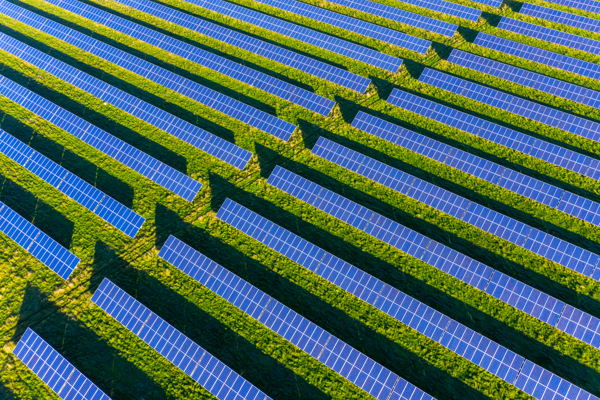

Renewable energy sources thus reached a record figure of 22.4 terawatt hours (+7 per cent), accounting for 34 per cent of the Belgian energy mix. According to Elia, it is also increasingly common for half of Belgium's consumption to be covered by renewable energy sources. In 2025, this was the case more than 16.2 per cent of the time.
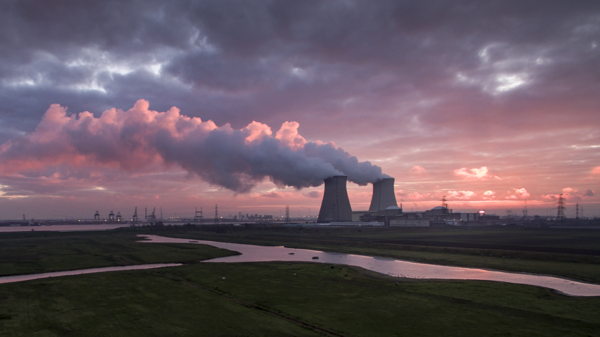
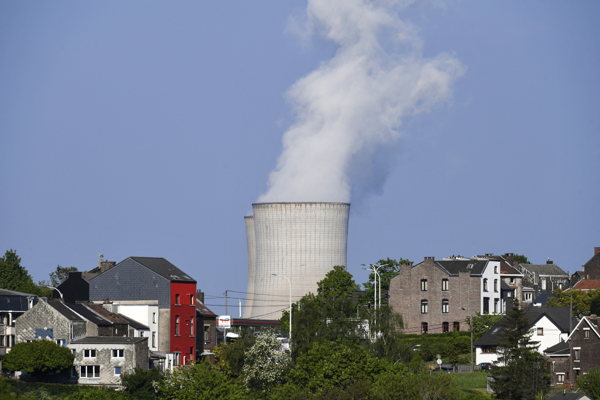
Nuclear energy still remains slightly larger, with a production of 22.5 terawatt-hours (-24 per cent) and a share of 34 per cent. The sharp decline of 24 per cent is a result of the closure of three nuclear reactors: Doel 1 on 15 February, Tihange 1 on 1 October and Doel 2 on 1 December.

Elia also reports that Belgium imported more electricity than it exported for the third year in a row. Imports come from France and the Netherlands, while Belgium exports electricity to Germany, the United Kingdom and Luxembourg.
Finally, total electricity consumption in Belgium has remained more or less stable at 80.1 terawatt hours. A sharp increase in consumption is expected in the coming years due to the electrification of society.
Illustration © PHOTO IMAGEBROKER
Related news