Prévot seeks to revive EU enlargement hopes in Western Balkans

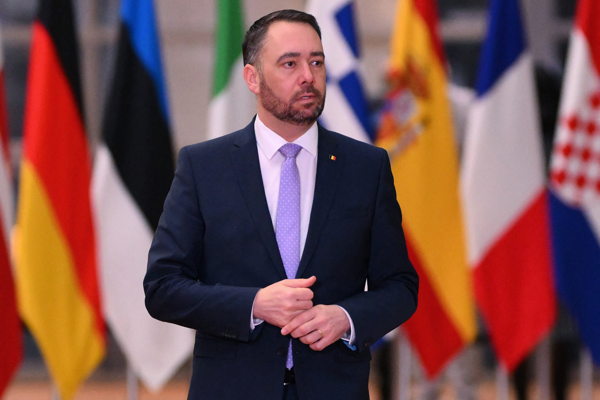
Belgian Foreign minister Maxime Prévot continued his Western Balkans tour with a visit to North Macedonia, following stops in Montenegro and Serbia.
The week-long mission, which will also take him to Kosovo and Bosnia and Herzegovina, comes at a time when enlargement is moving forward more steadily than in recent years, particularly for frontrunners in the region.
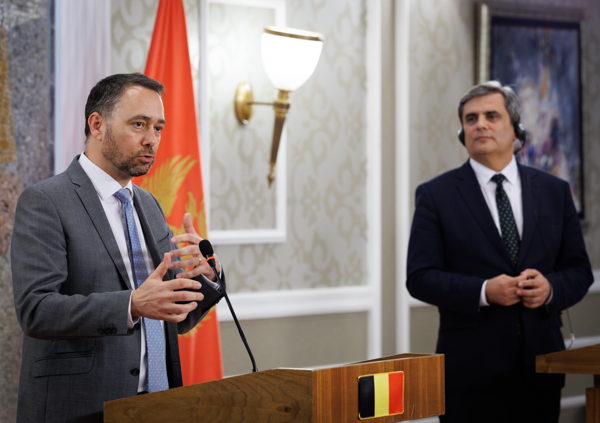
Montenegro remains the most advanced candidate and is aiming to join the EU by 2028. During his visit, Prévot praised the pace of reforms but stressed that further progress was still required, notably on judicial independence, corruption and organised crime.
In Serbia, the message was more measured. While reaffirming that the EU’s doors remain open, Prévot emphasised that further progress must be grounded in “credible and measurable reforms”, reflecting Belgrade’s slower pace on key issues and tougher ties with Brussels.
In North Macedonia, Prévot warned against growing “enlargement fatigue” in public opinion after more than two decades of waiting for EU accession progress.
He noted that the country - already a NATO member and closely aligned with EU foreign policy - has made significant compromises on its European path, including changing its name in 2018 to resolve a dispute with Greece. However, the process remains stalled due to ongoing constitutional demands linked to disputes with Bulgaria.
Prévot said Skopje was still committed to reforms but stressed the importance of avoiding new bilateral obstacles that could further delay progress.

Prévot’s tour reflects a broader shift within the EU, where enlargement has regained urgency amid geopolitical tensions. However, progress is uneven across the Western Balkans.
Experts warn that even the most advanced candidates cannot afford to be passive. Beyond meeting technical criteria, countries such as Montenegro and Albania are increasingly expected to demonstrate how they would strengthen the EU, whether through contributions to European security, participation in defence efforts, or advances in renewable energy and infrastructure.
At the same time, political sensitivities within the EU could complicate the process. Concerns over migration, corruption and governance, often amplified in domestic politics in member states, mean that ratification of future accessions is not guaranteed.

While frontrunners move ahead, others risk being left behind. In Bosnia and Herzegovina, the accession process has stalled despite candidate status and the formal opening of negotiations.
Persistent political divisions, institutional paralysis and limited reform progress continue to hold the country back. Analysts also point to inconsistencies in the EU’s approach, where political decisions have at times overshadowed strict merit-based criteria. This has weakened incentives for genuine reform.
As Prévot continues his mission, he is also reinforcing a broader EU message: that the prospect of membership must remain credible not only for frontrunners but also for countries further from meeting the criteria.
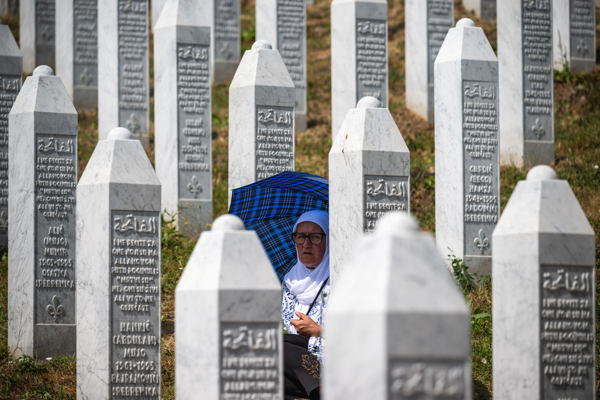
He will next travel to Kosovo, where he is due to meet political leaders and Belgian troops serving in the NATO-led KFOR mission, before concluding in Bosnia and Herzegovina, including a visit to Srebrenica, a symbolic reminder of the region’s fragile but vital stability.
Belgian Foreign minister Maxime Prevot in Skopje © BELGA PHOTO BENOIT DOPPAGNE
Related news