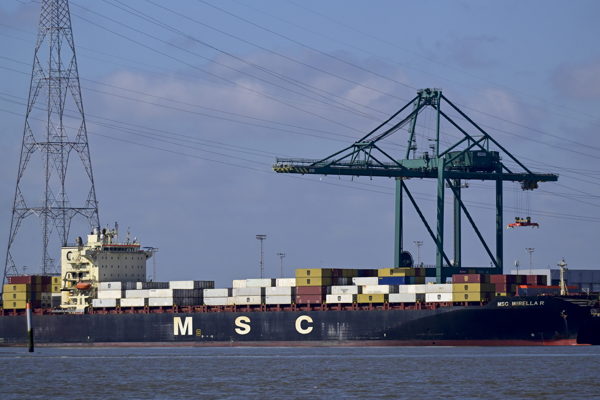
Port of Antwerp-Bruges hit by weak start to 2026 despite limited Middle East impact

The Port of Antwerp-Bruges handled 65.5 million tonnes of maritime goods in the first quarter, with strikes and adverse weather conditions costing an estimated 1.1 million tonnes in lost throughput. While the initial impact of the conflict in the Middle East is beginning to show, it has so far remained limited.
Total cargo throughput fell by 3.2 per cent in the first quarter of 2026. Container volumes also declined, dropping by around 5.5 per cent in tonnage compared with the same period last year.
"A weak start to traffic," the port authority said in a press release on Thursday. "External circumstances are making themselves felt."
According to the port, the weaker container performance reflects a combination of factors. The start of 2025 was unusually strong due to a reshuffling of container alliances, while current figures point to a weaker export position in Western Europe.
"A snowstorm and persistent cold in January, followed by storms in the Bay of Biscay until mid-February, disrupted shipping and terminal operations," the port said. "The four-day strike against pension reform also had a significant impact. The disruption of the nautical chain led to the diversion of a number of vessels to other ports and for incompletely handled cargoes."
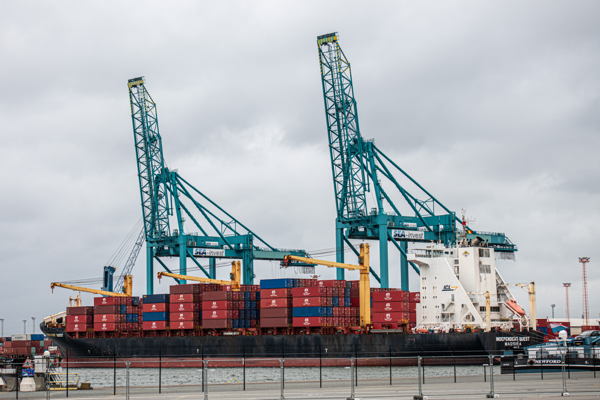

Mixed cargo trends and limited Middle East impact
Conventional general cargo is under pressure, partly due to lower steel exports to the United States, Mexico and Canada. By contrast, roll-on/roll-off (ro-ro) traffic, including cars and other vehicles, is on the rise.
Dry bulk volumes, including grain and coal, fell by just under 5 per cent, driven by declining fertiliser shipments and reduced coal traffic. Liquid bulk recorded a slight increase, supported by a rebound in March. Volumes of gasoline, naphtha, fuel oil and LNG rose, while diesel, kerosene and LPG declined.
The impact of the conflict in the Middle East on Antwerp-Bruges has so far been limited. According to the port authority, longer sailing routes via the Cape of Good Hope have played a role. "The decline in inbound and outbound traffic from the Persian Gulf by 12 per cent and 49 per cent respectively during this period is mainly attributable to weather conditions."
Following the escalation on 28 February, when the United States and Israel launched attacks on Iran, the effects began to be felt about a month later. The last LNG tanker from Qatar arrived in Zeebrugge on 23 March, while container shipping companies have since redrawn schedules towards the Middle East and the Mediterranean.
"Disruptions in supply chains are causing uncertainty "
"The main impact of the conflict and the blockade of the Strait of Hormuz is indirect for the time being," the port authority said, pointing to rising energy and fuel prices. "These increase bunkering and transport costs and put additional pressure on the competitiveness of our industry. At the same time, low European gas stocks—which must be replenished by next winter—and disruptions in supply chains are causing uncertainty and inflationary pressure."
Despite ongoing geopolitical uncertainty, the port continues to focus on long-term priorities, including green investment and terminal modernisation. Talks are underway this week with terminal operator PSA in Singapore regarding concessions.
"This quarter's figures show how strongly external factors are weighing on port activity today," concluded interim CEO Rob Smeets. "We are seeing geopolitical tensions, disruptions in the logistics chain, and the difficult position of European industry. At the same time, this confirms the importance of robust port infrastructure."

Antwerp port alderman Johan Klaps echoed this assessment, warning that the challenges are structural rather than temporary. "What we are seeing here is not a temporary fluctuation but a structural challenge for the European economy. High energy costs and an uneven international playing field are putting our competitiveness under pressure. If we want to safeguard our strategic autonomy and prosperity, Europe must act faster and more decisively."
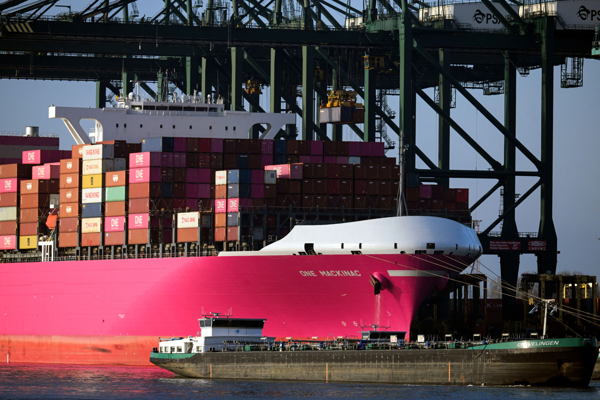
#FlandersNewsService | Port of Antwerp-Bruges © NICOLAS TUCAT / AFP
Related news