OECD: Many Flemish teachers feel overwhelmed by AI

More than half of Flemish teachers who have not yet made the transition to AI feel overwhelmed by the expectation to use digital tools. This is one of the highest percentages within the OECD, according to the Digital Education Outlook 2026. In its report, the Organisation for Economic Co-operation and Development also warns against “cognitive laziness” among pupils.
The OECD analysed the impact of generative artificial intelligence on education systems worldwide. Generative AI refers to tools that can independently generate text or other output. The best-known tools are OpenAI's ChatGPT and Google's Gemini.
Its report praises the way AI has been incorporated into the new minimum targets in Flanders’ primary education, which will be systematically rolled out from the 2026-27 school year. By the sixth year, pupils will need to know what AI is and be able to formulate an effective prompt in an AI tool provided by the school.
Digital literacy will be taught from the fourth year. Flanders is one of the frontrunners in this area, along with the Czech Republic, Finland, Norway and Türkiye.
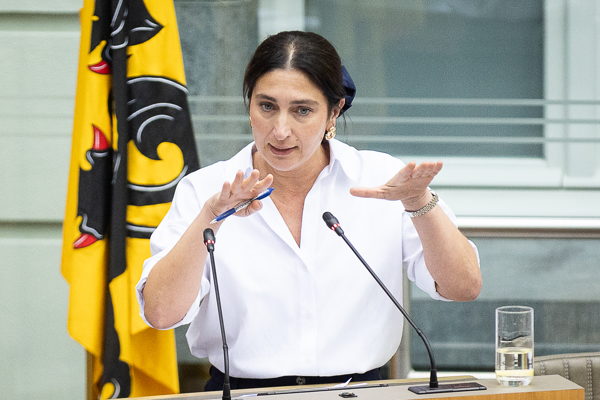

However, these goals are meeting with resistance. Flemish teachers, like their colleagues in Japan, Croatia and Serbia, most often say they feel overwhelmed by digital expectations. This feeling is particularly prevalent among those who have not yet embraced the technology.
In the first grade of secondary school, more than half of the teachers who do not yet use AI see these high demands as a barrier. It prevents them from introducing AI into the classroom.
'Cognitive laziness'
There is still a great deal of uncertainty about the effect of AI on learning performance. An experiment in Türkiye showed that pupils who used AI to solve maths problems scored better in the short term: an increase of 48 per cent. However, when they then had to take a test without AI, they scored 17 per cent worse than pupils who had never used AI.
The OECD refers to this as “cognitive laziness”: pupils use the tool as a shortcut to the answer, which means they do not really process the subject matter. The organisation therefore advocates AI tools that are specifically developed for education and that guide pupils with questions, rather than giving them the answer straight away.
#FlandersNewsService | Illustration © PHOTO MATTHIEU RONDEL / AFP
Related news