No breakthrough on frozen Russian assets after "constructive" meeting with De Wever

On Friday, Belgian prime minister Bart De Wever, German chancellor Friedrich Merz and European Commission president Ursula von der Leyen had a "constructive" discussion on the using frozen Russian state assets to finance a major loan for Ukraine. The European leaders also reiterated the need for a consensus before 18 December.
The Commission wants to leverage around 185 billion euros in blocked Russian assets held mainly at Brussels-based Euroclear, but Belgium remains opposed, warning of major legal and financial risks. To convince De Wever to go along with the EU's plan, Merz and von der Leyen visited Brussels on Friday.
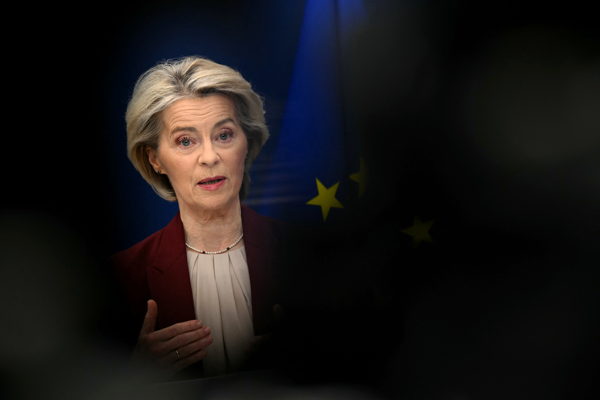
Afterwards, von der Leyen described the trilateral discussion as a "constructive exchange" and stressed that supporting Ukraine is essential for European security. She also acknowledged Belgium's unique exposure, saying that the country should not be left to shoulder disproportionate risks if Russia launches lawsuits or demands compensation. Merz echoed that message in German media.

Belgian opposition remains
The Commission wants to reach a consensus by December 18, when the next European Council meeting takes place. But opposition in Belgium remains strong.
On Friday, banking federation Febelfin warned that the Commission’s proposal poses "an unpredictable risk to the stability of Belgium as a country". If investors fear that foreign assets held in Europe can be seized too easily, Febelfin warns, it could trigger capital flight and undermine trust in European financial markets.
"EU government leaders should ask themselves one question: what if Euroclear were based in my capital?"
The Federation of Belgian Enterprises (FEB) issued a similar warning on Friday. "EU government leaders should ask themselves one question: what if Euroclear were based in my capital? Am I then willing to take the risk they are asking of Belgium now?" said CEO Pieter Timmermans.
The Belgian government instead favours a joint European loan, which De Wever again described on Friday as the "simplest and cheapest" solution. But this option requires unanimity from all 27 member states, including countries with strong ties to Russia, such as Hungary. The Commission’s Russian-assets plan, by contrast, would only require a qualified majority.
© BELGA PHOTO NICOLAS MAETERLINCK
Related news