New aid strategies meet an unchanging map of war

Belgium published a new humanitarian strategy last week, saying it wanted to adapt its aid policy to a world shaped by constant war, climate shocks and rising geopolitical tension. But a major new global report now suggests that, even as donors rethink how they give assistance, the places suffering most from conflict have barely changed.
The study, produced by the Geneva Academy of International Humanitarian Law and Human Rights, reviews major conflicts across Africa, the Middle East, Europe and parts of Asia. It finds that civilians continue to suffer on a huge scale and underlines repeated attacks on homes, hospitals and schools, alongside torture, sexual violence, mass displacement and the killing of detainees.
Several of the conflicts highlighted mirror the regions Belgium says will stay high on its agenda. In the Democratic Republic of the Congo (DRC), armed groups in the east have forced large numbers of people to flee and have destroyed water systems, contributing to disease outbreaks. Aid deliveries are often blocked, leaving communities without basic services.

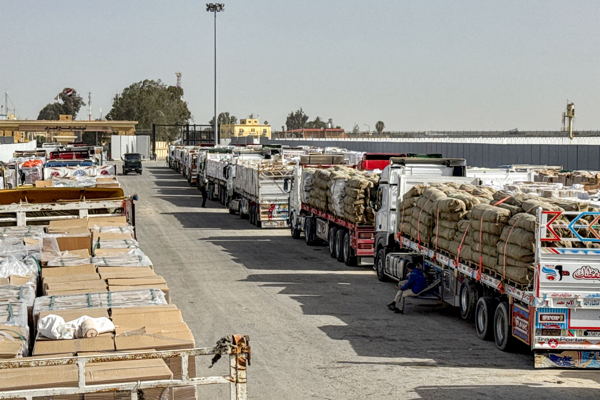
In the Palestinian territories, particularly Gaza, the report describes widespread destruction of housing, farmland and health facilities, as well as extremely high civilian casualties. It also points to continuing fighting involving Israel, Lebanon and Syria, underlining how instability in the region has spread across borders.
Sudan is another major focus. Researchers document massacres of civilians, attacks on hospitals and extensive sexual violence as rival forces battle for control. Ukraine features prominently too, with ongoing strikes on residential areas and the growing use of drones far from the front lines.
International oversight
Alongside these grim findings, the report urges governments to tighten controls on weapons exports, warning that arms transfers must not go ahead where there is a clear risk they will be used to harm civilians. It also calls for new international rules to limit the use of inaccurate or highly destructive weapons in populated areas, including certain air-dropped bombs, long-range artillery and armed drones.
The authors also stress the need to tackle impunity. They argue that war crimes must be properly investigated and prosecuted, and that international courts and national justice systems require stronger political and financial backing if international humanitarian law is to mean anything in practice.
Belgium’s new strategy says it will continue to prioritise long-term crisis regions such as the Sahel, the Great Lakes in Africa, Syria and the Palestinian territories, as well as “forgotten crises” that attract little attention.
But the overall message from the report is blunt: while policy shifts in donor countries may improve how aid is delivered, millions of people will remain trapped in the same conflicts year after year if serious action is not undertaken to curb weapons flows, protect civilians and enforce the laws of war.
© PHOTO AFP
Related news