Liège loses bid to host European Customs Authority

Liège will not become the seat of the future European Customs Authority (ECA), after representatives of the Council of the European Union and the European Parliament elected Lille on Wednesday. The decision marks a setback for both the federal government and the Walloon Region, which had backed the city’s candidacy.
The European Council and European Parliament eliminated Liège in the first round of Wednesday's election, alongside candidates such as Malaga, Porto, Zagreb and Warsaw. Lille and Rome remained as the final two contenders. After three voting rounds, the French city emerged as the winner, with 36 votes in favour.
As the Liège candidacy was a Walloon effort, the failed bid suffered from a lack of support from the federal government, L'Echo reports. Some stakeholders pointed to the absence of federal Finance minister Jan Jambon from key moments in the process, despite his responsibility for customs. In contrast, France strongly backed Lille’s candidacy at political level, efforts which resulted in winning the bid.
Despite the defeat, local actors say Liège is likely to contribute to the future customs framework. Marc Bourgeois, dean of the University of Liège’s law faculty, told L'Echo the institution would make its expertise available to the eventual host city, in cooperation with the University of Antwerp.

Europe's cargo hub
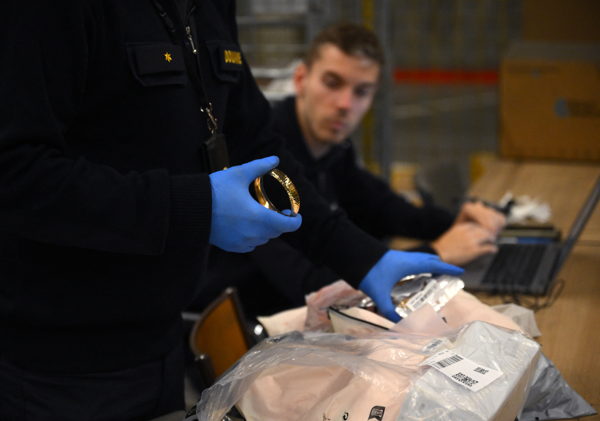
The ECA, announced in 2023, is intended to serve as a central hub supporting national customs agencies. It is meant to be a response to the challenges posed by rising trade volumes, the expansion of e-commerce, and shifting geopolitical priorities. The authority is expected to employ around 250 people.
Liège had been revealed as Belgium’s candidate in November 2025. Supporters argued that the city offered a strong combination of academic expertise - as host of the Customs & Trade Law Academy - and logistics infrastructure.
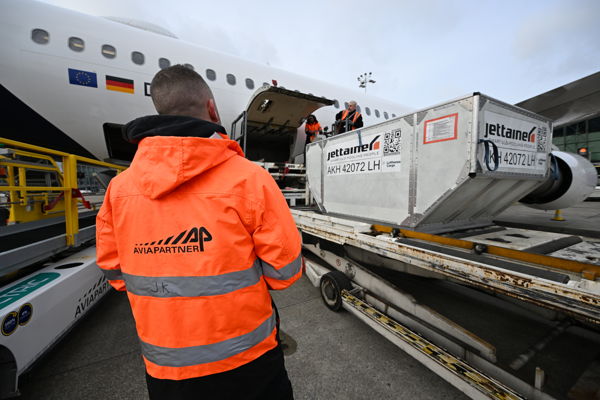
In particular, the application highlighted the role of Liège Airport as one of Europe's major cargo hub, processing around 20 per cent of goods purchased online outside the EU. The airport’s high volume of small parcels was seen as providing valuable, real-world insight into modern customs challenges.
© BELGA PHOTO ERIC LALMAND
Related news