KMSKA rejects proposed role in Flemish museum reform

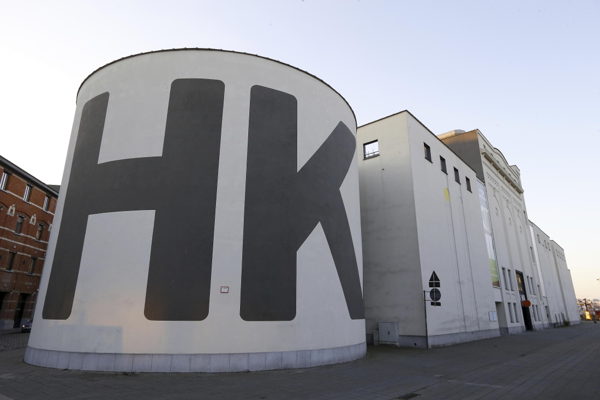
The Royal Museum of Fine Arts Antwerp (KMSKA) has declined to take part in the museum plan proposed by Flemish Culture minister Caroline Gennez, distancing itself from a far-reaching reorganisation of the Flemish museum landscape. The refusal is outlined in a memo from the museum’s governing body to the minister, dated 2 December and reported on Wednesday by De Morgen.
Gennez recently announced a thorough restructuring of Flanders’ publicly funded museums, citing a sector assessment and the ambition to increase collaboration and reduce fragmentation.
“The reason for this is a recent assessment of the functioning of its own museums and the ambition to increase and improve collaboration within the sector,” the Flemish government said. According to Gennez, “fragmentation and internal competition hinder collaboration, scaling up and internationalisation”.

Under the plan, Flemish museums would be grouped into three clusters, each anchored by a major institution acting as a “beacon”. KMSKA would become the reference point for fine arts, alongside partners such as the Hof van Busleyden Museum in Mechelen and Gaasbeek Castle. S.M.A.K. in Ghent would lead the Contemporary and Contemporary Arts cluster, while Ostend’s Mu.ZEE would become the focal point for Modern Art and Belgian Masters.
KMSKA’s board of directors, however, has rejected this role. “The governing body disagrees with the intention to place the KMSKA within a fine arts hub and strongly advocates for the preservation of a museum-like structure focused on contemporary art in Antwerp,” the memo reads.
The museum describes itself as “a hybrid museum where old and modern masters take centre stage and interact with contemporary art and performances.” It adds: “New stories constantly emerge from the dialogue between past and present, ensuring the collection remains current, relevant, and inspiring for future generations. The hybrid museum, like society, refuses to be compartmentalised.”
"The hybrid museum, like society, refuses to be compartmentalised"
On that basis, the memo calls for the plan to be revised. “The KMSKA explicitly requests that the division into three hubs be abandoned and refuses to be pigeonholed into a fine arts hub alongside two others. The KMSKA refuses to participate in an ecosystem in which the governing role for Belgian modern art is exclusively assigned to Mu.ZEE.”
The debate comes as the reform entails major shifts elsewhere in the sector. S.M.A.K. in Ghent is set to become the new Flemish Museum for Contemporary Art, taking over much of the collection and museum function of Antwerp’s M HKA, which will be transformed into an arts centre for exhibitions, residencies and workshops.
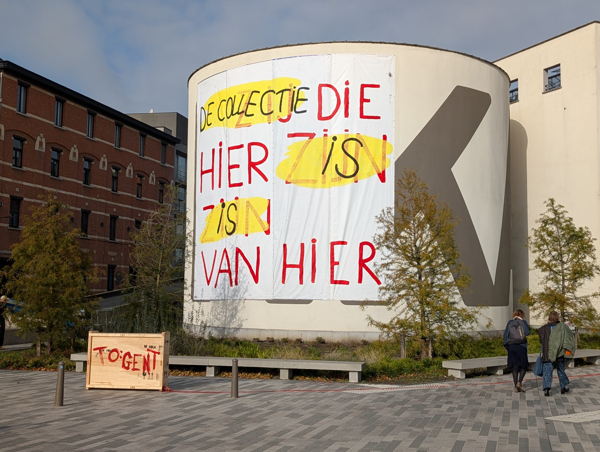

The Flemish government has also cancelled the subsidy for a new M HKA building, reallocating part of the 130 million euro budget to support museum transitions.
The restructuring is due to be phased in from 1 January 2026, with the full impact on the museum landscape expected to be clear by 2028.
#FlandersNewsService | KMSKA © BELGA PHOTO TOM GOYVAERTS
Related news