Jewish community remains main target of terrorist threats in Belgium

Last year, the Belgian Coordination Unit for Threat Analysis (CUTA) received 157 reports of terrorist or extremist threats. This represents a 26 per cent decrease compared to 2024. The Jewish community remains the main target of potential attacks in Belgium.
When CUTA receives a report from the police, intelligence services, or the National Crisis Centre, it conducts a thorough analysis and classifies the report on a scale of 1 to 4. In the vast majority of cases last year, the threat was assessed as low or medium, with only 5 per cent considered serious. None of the reports concerned a “very serious and imminent” threat (level 4).
As a result, not only did the total number of reports fall from 213 to 157, but so did the risk level: in 2024, 12 per cent of reports were classified as level 3, twice as many as in 2025.


The ideological composition of the threats has also changed somewhat, according to CUTA. Islamic extremism remains the main cause, but has fallen sharply in the figures. According to director Gert Vercauteren, this is partly due to “the reduced effectiveness and appeal of organisations such as Islamic State.” In addition, international conflicts (such as the war in Gaza) had a less strong mobilising impact because they are no longer in their initial phase but have often been going on for a number of years.
Threat reports linked to foreign countries, such as threats against embassies or ethnic communities, accounted for a quarter of all cases last year.
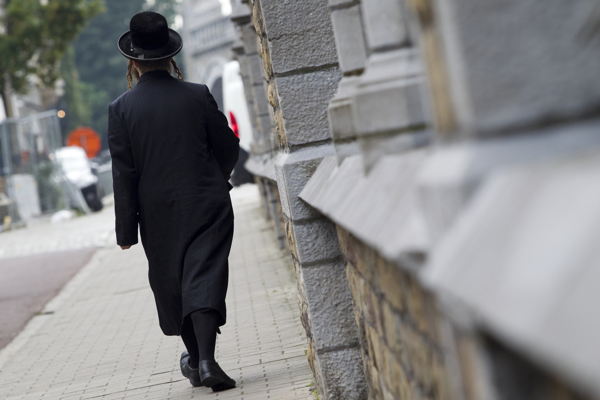

Israeli and Jewish interests and political authorities were once again the main targets in Belgium. This was also the case two years ago. The general public, public buildings, and the security services themselves were also threatened. Politicians are also sometimes at risk, as the investigation into the possible terrorist attack on prime minister Bart De Wever has shown.
Finally, the CUTA notes an increase in threats from both right-wing and left-wing extremists. Last summer, for example, it warned of radicalisation within the climate umbrella organisation Code Rood.
As for the profile of the potential perpetrators, the vast majority (75 per cent) of cases involved so-called “lone actors”: individuals who wanted to take action on their own initiative.
The general threat level in Belgium has remained at level 3 since the attack on three Swedish football fans in October 2023. This means that the threat is assessed as “serious” and that, according to CUTA, an attack is “possible and probable”. International “trigger events”, such as the war between Hamas and Israel, and incidents and investigations abroad are the main reasons for this.
Illustration © BELGA PHOTO DIRK WAEM
Related news