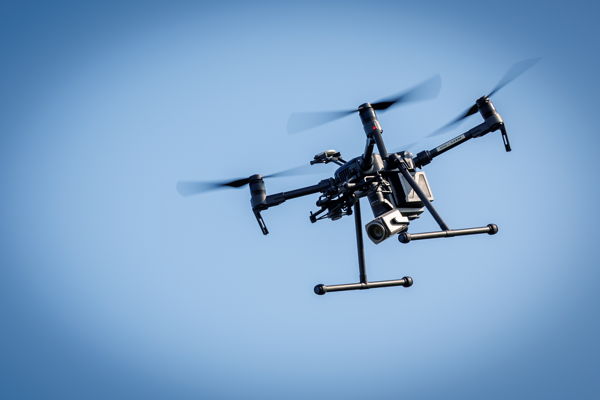
Infrabel plans nationwide drone rollout despite airspace constraints

Belgian rail infrastructure manager Infrabel has completed a drone test project in the Port of Antwerp and is now preparing a nationwide rollout, backed by an investment of around 3 million euros.
However, the company warns that fragmented airspace regulations are limiting the technology’s immediate usefulness, with spokesperson Thomas Baeken noting that “today, we cannot always deploy the drones immediately.”
Positive trial results
Drones offer a rapid way to assess incidents on the rail network, despite limitations such as poor weather conditions. Since 2023, Infrabel has been testing their use in cooperation with the Port of Antwerp. The results have been encouraging, with Baeken describing the project as “particularly positive” and confirming that the company intends to expand the programme across Belgium.

That expansion, however, depends on changes to the regulatory framework. Infrabel is seeking the same operational freedoms granted to services such as the police, customs, and civil protection, which can deploy drones without prior authorisation. At present, this is not the case for the rail operator.
“We cannot always deploy them immediately because Belgian airspace is fragmented,” Baeken explains. “There are various so-called geozones with strict rules. Approximately 60 per cent of the railway network lies within such zones.” To address this, Infrabel is requesting State Flight status, which would allow drones to operate within these restricted areas.
© BELGA VIDEO JEROME FETU
The company is also calling for the railway network itself to be recognised as a permanent geozone. Each year, hundreds of illegal drones are detected above the tracks. Rather than banning them outright, Infrabel wants to regulate and monitor their use more effectively, something a permanent geozone could facilitate. Federal Mobility Minister Jean-Luc Crucke is reportedly open to prioritising the issue.
In preparation for wider deployment, Infrabel is training around 30 drone pilots, 20 of whom have already completed their training. The programme is centrally managed via national air traffic control in Brussels.
While the investment is significant, Infrabel argues that drones are more cost-effective than fixed camera systems, with a full camera replacement estimated to cost roughly twice as much.
The company plans to operate two types of drones: ten with mobile launch platforms and 20 with fixed installations. While the total investment is expected to reach around 3 million euros, the exact figure remains subject to final procurement.
Operational advantages
“In the event of operational problems, such as switch failures or signal failures, a drone can quickly provide a clear picture of the situation on the ground,” Baeken says. “The drone also performs a reconnaissance flight in the event of a derailment or accident. This information allows for faster, safer, and more targeted action, and can be immediately shared with the emergency services.”
Drones are already in use in several locations, including Antwerp, the Waaslandhaven, Vorst-Rijtuigen and Châtelet. By 2027–2028, Infrabel aims to equip a further 30 strategic railway sites. As part of the rollout, the company has also had to bypass certain Chinese software to ensure secure deployment.
So far, four systems have been purchased at a cost of 320,000 euros. A public tender for the remaining drones, both mobile and fixed-platform, is expected, bringing the total investment to between 2.5 million and 3 million euros. It remains unclear when the tender will be launched or which companies will bid.
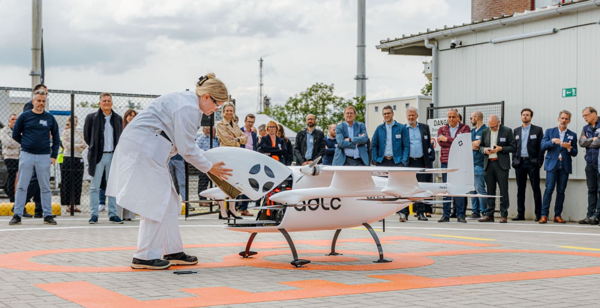
Railway infrastructure company Infrabel holds a press moment to present their plans with drones, on Wednesday 01 April 2026 in Antwerp. © BELGA PHOTO ROBBE VANDEGEHUCHTE
Related news