Industry calls for action on electricity prices, ING expects growing impact US tariffs

Febeliec, the Federation of Belgian Industrial Energy Consumers, is sounding the alarm over high electricity prices following the publication of a new report. Meanwhile, ING has more bad news: a year after the start of Trump’s tariff war, the bank warns that the worst is yet to come for Belgian exporters.
An annual study by Febeliec, conducted prior to the price spike caused by the war in the Middle East, shows that the industry’s electricity price disadvantage is barely decreasing and remains at 6 to 17 per cent this year compared to the average price in Belgium, France, Germany and the Netherlands combined. The current situation heightens the urgency, emphasises the organisation.
The total price of electricity rose in all countries in the 2026 edition of the study, mainly due to higher wholesale prices. In Belgium, network costs and taxes remained fairly stable, but the energy cost itself “rose in line with the trend across Europe”. Prices in Flanders and Wallonia are higher than in Germany and France, but lower than in the Netherlands, with the exception of 100 GWh consumers in Wallonia.


Belgian industry is facing a “double handicap”, according to Febeliec. European prices for gas and electricity are “substantially higher” than elsewhere in the world and electricity remains considerably more expensive than in neighbouring countries, the organisation states.
Important: the study was completed on 16 February, so before the start of the war in the Middle East and all its consequences for the price of oil products, natural gas and electricity.
According to Febeliec director Peter Claes, there is increasingly “a situation where industry is caught” between climate-related costs and higher prices. All the more so because, in the US for example, those climate investments are actually declining. The electrification of industry that needs to take place “doesn’t fit in” with higher electricity prices.
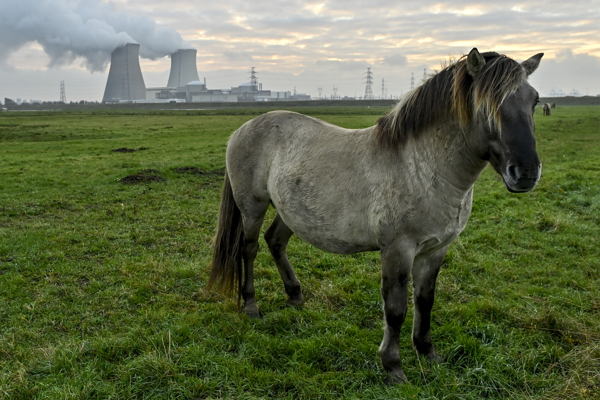

Febeliec is calling for swift action from the governments. According to the federation, the regions can help by swiftly implementing the new European state aid rules to strengthen and accelerate the development of a clean industry (Clean Industrial Deal State Aid Framework, CISAF). The regions can also help through the (broader) application of the scheme for compensation of indirect emission costs.
According to the organisation, the federal government must grant a discount on transmission tariffs for certain consumption profiles. A draft bill on the “energy standard” that would make this possible was voted on this week in the parliamentary committee. The industry is also advocating for the extension of the operational life of as many nuclear power plants as possible, for as long a period as possible.
Growing impact US tariffs
Meanwhile, a study by the bank ING sheds light for the first time on the impact of US import tariffs on the Belgian economy. The striking conclusion is that Belgian companies remained “relatively sheltered” in 2025 “due to the specific composition of our exports”. For instance, Belgium trades heavily in chemical and pharmaceutical products, as well as diamonds. The tariffs on these goods are lower than those on cars or base metals.
Based on US customs figures, ING calculated that Belgium faced an effective import tariff of around 5.5 per cent – and certainly not 20 per cent. Moreover, that 5.5 per cent is significantly lower than in countries such as Italy, Austria, Spain, Germany and France, and it is small change compared to the tariff imposed on China. Belgium’s competitive position therefore remained largely intact.
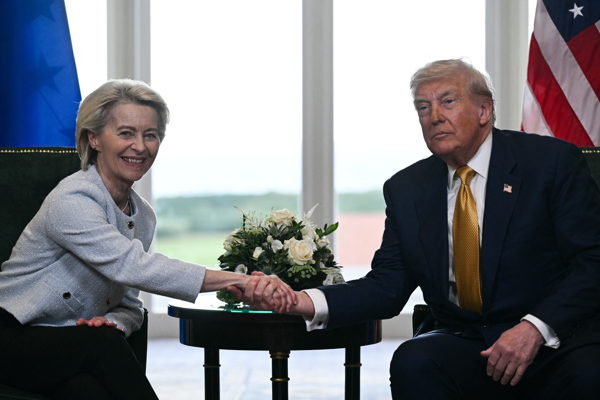

In 2026, Belgian companies will lose that advantage. Because Trump can no longer impose import tariffs at his own discretion, the US will levy a general tariff of 15 per cent on all countries. “This is an improvement for countries such as China and India, meaning Belgium will lose its relatively advantageous competitive position,” stated ING.
Add to that the turbulence in the Middle East, and it seems that the worst is yet to come for Belgian exporters. ING expects exports to the US to fall by a further 4.7 per cent in 2026.
Illustration © PHOTO BELGIAN_FREELANCE