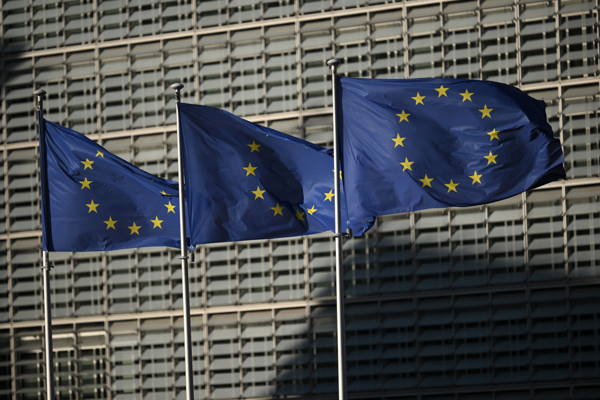
Foreign minister: EU must take firmer stance on Israel sanctions

The EU must take a firmer stance on sanctions against Israel, which is undermining the union's principles and values, Belgium’s Maxime Prévot said on Tuesday ahead of the Foreign Affairs Council meeting in Luxembourg.
Last year, the European Commission put forward a number of sanctions against Israel over its actions in Gaza. The proposals included a partial suspension of the Association Agreement between the EU and Israel, arguing that Israel was in breach of Article 2, which requires respect for human rights and democratic principles. The necessary qualified majority has not been achieved among member states, with Germany and Italy among those opposing the move.
Following Israel’s attacks on Lebanon, several countries have called for at least a partial suspension of the Association Agreement to be put back on the table. For Foreign minister Prévot, it is “clear that we must do everything to toughen the tone of the sanctions”.

“Belgium has been pressing for at least a partial suspension of the Association Agreement between Israel and the EU for several months, in the knowledge that a full suspension is likely unfeasible given the positions of the various countries,” he said on Tuesday.
A full suspension of the agreement – not only the trade section as proposed by the Commission but also the political section – requires unanimity. Spain is calling for this move, but the German Foreign minister reiterated on Tuesday that a suspension would be “inappropriate”.
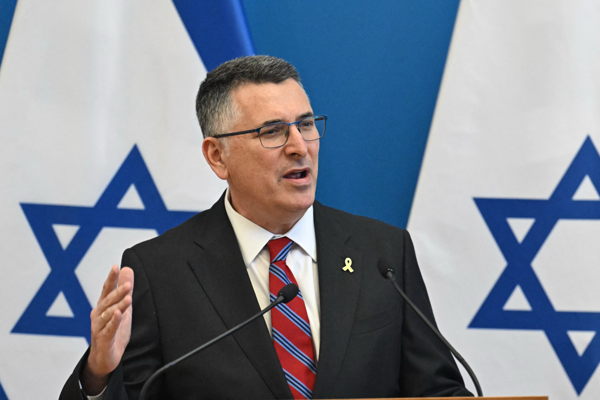

“We must be able to take steps to influence the debate,” Prévot said. He described the expansion of settlements, "unprecedented" levels of violence by settlers and the recent adoption of legislation on the death penalty as “serious attacks on the principles and values of the European Union”.
The European Commission had proposed sanctions against violent settlers and extremist ministers, but unanimity is required for this too. Sanctions against settlers are being blocked solely by Hungary. Diplomats are hoping for a breakthrough after Peter Magyar’s victory over Viktor Orban in this month’s parliamentary elections.

On Monday, Prévot met Palestinian prime minister Mohammed Mustafa on the sidelines of a meeting of the Global Alliance for the Implementation of the Two-State Solution in Brussels, organised with the EU’s High Representative for Foreign Affairs, Kaja Kallas.
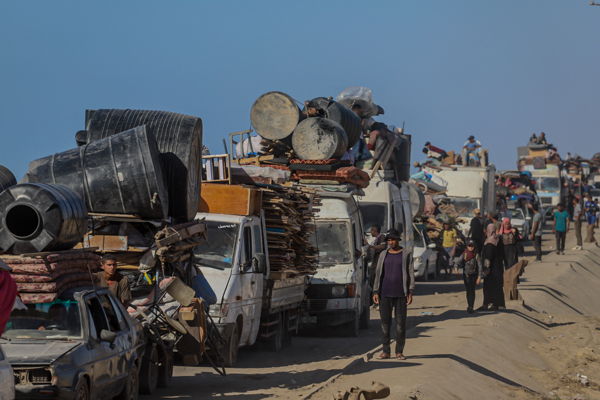

Belgian prime minister Bart De Wever adopted a more cautious stance than Prévot in the European Affairs Committee on Tuesday, pointing to deep divisions within the EU over the issue of possible sanctions.
“That division also exists in our country, in this parliament, within the majority,” he said. The federal government struggled to reach an agreement in September on support for a conditional partial suspension of the Association Agreement.
Maxime Prévot in North Macedonia during a diplomatic visit to the Balkans, 15 April 2026 © BELGA PHOTO BENOIT DOPPAGNE
Related news