Flemish Parliament to save 23m euros on its own operations

The Flemish Parliament is going to save a total of 23 million euros on its own operations. MPssalaries will not be indexed in the coming years and various additional allowances will be abolished. There will also be a reform of the system of transitional allowances for MPs finishing their mandate.
On Monday, the Bureau of the Flemish Parliament, the body responsible for day-to-day management, agreed on its budget for the period 2026-2030, which includes a series of cuts “that together will reduce the amount requested from the Flemish budget by 23 million euros”.
“Members of Parliament do not need inexplicable benefits. If something cannot be justified, we simply should not do it anymore,” said Freya Van den Bossche, speaker of the Flemish Parliament.
The Flemish Parliament is implementing a substantial reduction in the transitional allowances for MPs finishing their mandate. This allowance for departing members of parliament will be reduced and its duration halved.
In concrete terms, the expense allowance will no longer be included in the calculation, which would mean a saving of 2,650 euros per transitional allowance per month. The maximum duration will be halved to 12 months. For those who leave parliament after a long career, the total transitional allowance will still amount to 39 per cent of the current allowance.

In addition, MPs' salaries will not be indexed. This amounts to 18,000 or 24,000 euros per MP, depending on whether three or four indexations are skipped.
The Bureau is scrapping several additional allowances for Bureau members and committee chairs, and the allowance for the speaker of Parliament will be reduced by 13 per cent. Van den Bossche is also making savings by not providing herself with a driver.
Other benefits are also being cut. These include the budgets that MPs can use to order office supplies, the contribution to internet costs and the budget for foreign travel and working visits. Party subsidies and operating allowances will remain frozen until the end of the legislative period.


The administration has also decided to make savings on the resources used to run the parliament. For example, 14 people will not be replaced after they retire in the coming years. The pension bonus will also be reformed. Currently, staff members receive four months' gross salary when they retire. This bonus will be scrapped.
By investing in the training of its own staff, the parliament will need to rely much less on consultancy services. Significant savings will also be made on the organisation of events and receptions and on travel and accommodation costs. Some planned refurbishment work on the building, such as the dome hall, will not go ahead.
"It is a good way of showing that we realise that politicians do not deserve preferential treatment"
The aim of the savings is to bring the Flemish Parliament back to its fundamental tasks, according to Van den Bossche. “Politics must be more austere," she said. "A frugal budget is not only fair to the population, who also have to make savings, it is also a good way of showing that we realise that politicians do not deserve preferential treatment."
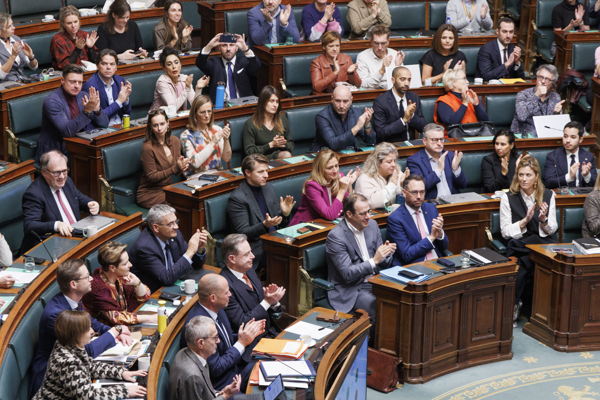
#FlandersNewsService | The Flemish Parliament in Brussels © BELGA PHOTO NICOLAS MAETERLINCK
Related news