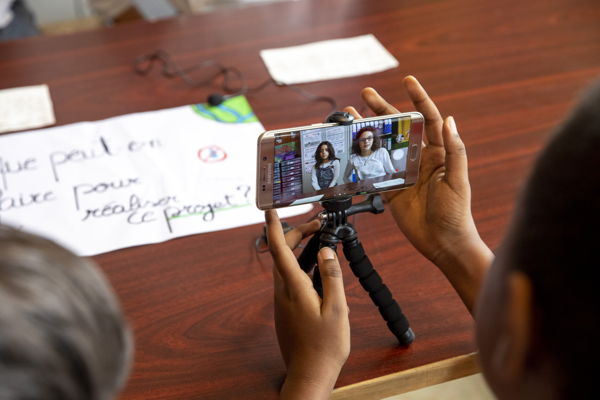
Flemish governments opts against social media ban for under children under 16

Flanders will not introduce a ban on social media for children under 16. Media minister Cieltje Van Achter (N-VA) confirmed this in her “Safe Online” action plan, which acknowledges the risks social media pose to young people but stops short of a total ban.
The decision follows a long-running debate about the impact of social media on children and teenagers. Young users are increasingly exposed to harmful content, unsafe interactions, addictive algorithms and disinformation.


Political divide over a total ban
While coalition partners Vooruit and CD&V argued for a minimum age of 15 or 16, similar to recent measures in Australia, N-VA opposed such a blanket ban. That position was backed by advice from the Superior Health Council, which called for stronger protection but warned against outright prohibition.
According to Van Achter, a ban would be counterproductive. “A ban would have the opposite effect and would not make social media disappear, but it would make the topic taboo,” she said. “Social media is also a source of support, expression, information and community for many young people.”
She also raised concerns about age-verification systems, warning they could raise privacy issues and “create a false sense of security”. “Teenagers would likely migrate to less regulated, potentially more harmful platforms or use alternative tools, such as gaming environments and messaging apps,” Van Achter said, referring to the Health Council’s report.
Responsibility of social media companies
Instead, the action plan places the main responsibility on social media companies themselves. Flanders wants stricter enforcement of existing rules, including proper age verification for children under 13, an end to addictive features such as infinite scrolling, and a ban on personalised advertising for minors.
Platforms that fail to comply could face severe consequences. “The principle is simple: anyone who structurally refuses to protect children and young people loses their right to our market,” Van Achter said. “Then we demand that they be taken offline. Just as we remove unsafe products from the shelves until they meet safety standards, we can also temporarily take platforms or services offline if the operator refuses to make them safe.”
Van Achter pointed to the European Commission’s decision to suspend TikTok Lite as proof that enforcement is possible. Disinformation is another key focus.

According to Van Achter, platforms such as Meta earn significant revenue from fake ads. “The problem isn’t that it’s too difficult,” she said, “it’s that it’s too profitable. Flanders wants to put a stop to this now. What’s illegal offline, we shouldn’t tolerate online either.”
Beyond protection and enforcement, the plan also aims to strengthen users themselves. Media literacy is to become a basic skill for every Flemish person, with a focus on helping people of all ages recognise disinformation, deepfakes and AI-driven manipulation.
#FlandersNewsService | © DAVID GRAY / AFP
Related news