Flanders blocked seven export licences in 2024 over fears of diversion to Russia

The Flemish authorities rejected seven applications for export licences for dual-use goods in 2024 due to concerns that they could be diverted to Russia. This is evident from a new analysis by the Flemish Peace Institute. Overall, Flanders granted licences worth 120 million euros last year, which was less than in the previous year.
Dual-use goods are products intended for civilian use that can also be used for military purposes. These include chemical substances, polymers, machinery, electronics, and cyber technology.
The annual figures show that the Strategic Goods Control Unit rejected a total of eleven individual licences. More than half of the approved licences were destined for industrial end users, followed by research institutions. Only a small number of transactions were intended for foreign armed forces or the defence industry.
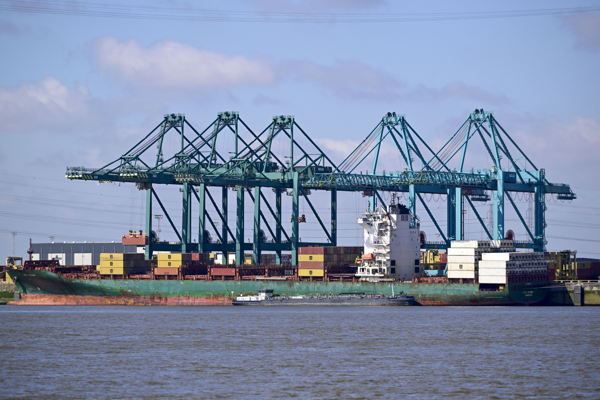

Notably, seven of the eleven rejected applications were for goods that were considered to be at risk of ending up in Russia. "In principle, trade with Russia has become virtually impossible," said Diederik Cops, a researcher at the Flemish Peace Institute. "With every European sanctions package, the list of prohibited items grows."
Consequently, Russia is increasingly turning to intermediary countries such as the United Arab Emirates or Armenia. "Russia is interested in GPS systems, infrared cameras and graphics cards. These are products with clear military potential."
Last year, Flanders issued 221 individual licences, valued at 120 million euros, down from 184 million euros in 2023. The main export destinations were the United Arab Emirates, Taiwan and China.


Sixteen 'global licences' were also granted, representing a theoretical value of 420 million euros. These licences offer greater flexibility as they cover multiple countries and eliminate the need for separate authorisation for each transaction.
China is also coming under greater scrutiny from the Flemish authorities. In 2024, it blocked the export of chips worth 1.4 million euros to a Chinese industrial client. Between 2013 and 2023, China was the largest destination for Flemish dual-use exports, with more than 700 million euros authorised over that decade. However, during the same period, over thirty licence applications for China were refused.
Export volumes to China fell noticeably in 2024 once again. “China remains an economically crucial partner, but concerns over strategic dependencies and potential military diversion are growing,” concluded Cops.
#FlandersNewsService | © BELGA PHOTO DIRK WAEM