Explosion at Liège synagogue raises fears of Iran-linked terror cells in Europe

Belgian prime minister Bart De Wever has warned about the growing threat of terrorism linked to Iran after an explosion damaged a synagogue in Liège earlier this week.
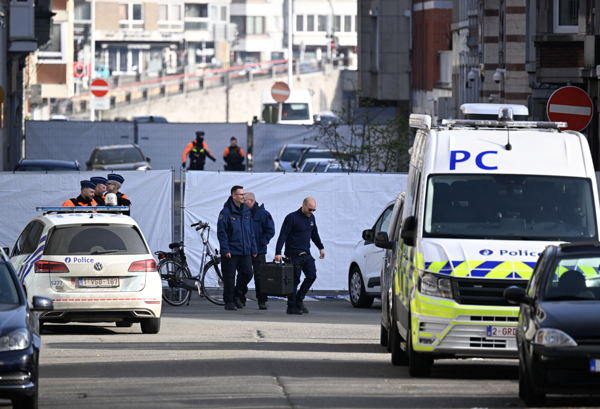
The blast happened around 4am on Monday at a historic synagogue in the eastern Belgian city. Security footage reportedly shows a masked man placing a burning object at the entrance before walking away moments before it exploded. Authorities are investigating the incident as a possible terrorist attack.
Speaking in the Belgian parliament on Thursday, De Wever said several European countries have raised concerns about “terror cells directed by Iran”. He stressed that Belgian authorities remain alert and ready to act.
The investigation is being led by Belgium’s federal prosecutor, who is analysing a video believed to have links to a jihadist organisation. Officials are also examining whether the attack could be connected to Iran.

The warning comes amid wider fears that the conflict involving Iran and Israel could trigger more extremist activity in Europe.
Security experts say there are different types of threats. Some attacks may be carried out by individuals acting alone, driven by anger or revenge. Others could involve organised networks or “state-directed” operations linked to foreign governments.
Researcher Annelies Pauwels from the Flemish Peace Institute told VRT NWS that such networks should be seen as “an additional layer of possible threat”. In some cases, people already living in Europe could be contacted and encouraged to carry out attacks.
”We need to see this as an additional layer of potential threat."
Belgian police recently arrested two people of Iranian origin in Sint-Truiden after they allegedly threatened to carry out an attack. Investigators say it is still too early to determine whether they were part of a larger network.
Concerns about Iranian-linked operations are not new. In 2018, Belgian authorities stopped a plot to bomb a meeting of Iranian opposition groups near Paris. The suspects were later convicted, along with an Iranian diplomat accused of organising the plan.
Meanwhile, politicians in Belgium are debating stronger protection for Jewish communities. Georges-Louis Bouchez has called for a national coordinator to fight antisemitism. Interior minister Bernard Quintin, in turn, has proposed deploying soldiers to guard sensitive locations in major cities.
Across Europe, attacks and threats against Jewish institutions have increased since 2023. Counter-terrorism experts say the ongoing Middle East conflict is further fuelling radicalisation and raising security risks for Jewish communities.
Police around the synagogue on Leon Fredericq street in Liege © BELGA PHOTO LAURENT CAVENATI