Exploring Flanders’ national parks: Hoge Kempen & Scheldevallei

It might sometimes seem like Flanders is becoming one large urban sprawl, but the region does have many spectacular nature areas, and even four recognised national parks. Today, Belga English presents the Hoge Kempen in Limburg and the Scheldevallei, which covers the area between Antwerp and Ghent around the river Scheldt and its tributaries.
Two years ago, the Flemish government designated four national parks: “areas of sufficient size with exceptional natural value and international appeal”. The parks receive subsidies to develop their biodiversity and should eventually comprise a 10,000-hectare natural core that’s robust enough to sustainably protect the exceptional nature they contain.


The Scheldevallei, or Scheldt Valley National Park, stretches along dozens of kilometres of the Scheldt river and its tributaries, covering about 8,000 hectares between Ghent and Antwerp. The Scheldt forms an extensive network ofrivers with the Rupel, Durme and Dender. Land and water are intertwined by numerous mudflats, salt marshes, meanders, creeks and marshes.

The water level here rises and falls with the tides, just like at the sea. Twice a day, the water recedes from the foreshore – the area that’s alternately under and above water – creating a vast swampy food supply for all kinds of animals.
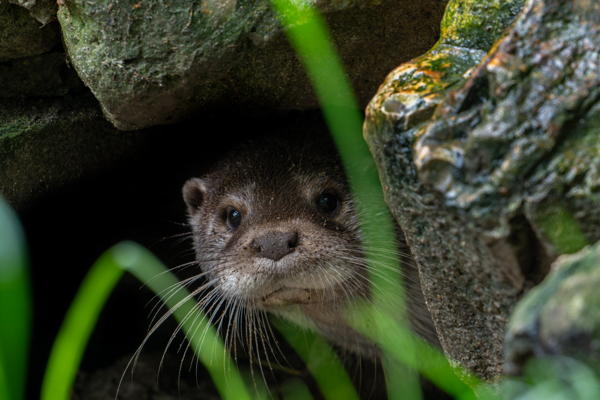
The otter chose the Scheldt Valley for its comeback in Flanders. Other exceptional animal and plant species in the park include the marsh-marigold, the beaver, the black-tailed godwit, the little bittern, the purple heron and the migrating white-tailed eagle. Thanks to improved water quality, more than 50 species of fish – including the twaite shad – are now swimming around in the Scheldt and its tributaries.


Opened on 23 March 2006, the Hoge Kempen is the oldest national park in Flanders. It takes its name from the Kempen Plateau, which lies on average 50m higher than the rest of the Kempen region. The area stretches across the municipalities of As, Bilzen, Bree, Dilsen-Stokkem, Genk, Lanaken, Maasmechelen, Maaseik, Oudsbergen and Zutendaal.
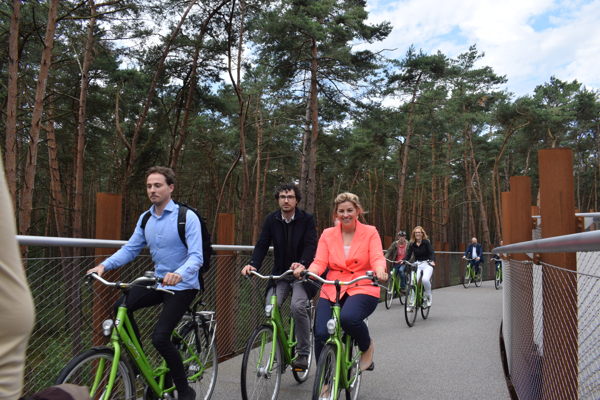

The Hoge Kempen consists of 12,000 hectares of purple heathlands, golden dunes, endless forests and exceptional fens. Forests make up approximately 70 per cent of the park. Heathland is one of the most popular landscapes for visitors, but only 10 per cent of the national park consists of wet and dry heathland.
The natural reserve is home to more than 9,000 species of plants and animals, about a quarter of the species richness in Flanders. It’s home to special species that are dependent on the heathlands, such as the smooth snake, the silver-studded blue butterfly and the saddle-backed bush cricket. There are also a few wolves living here. Other examples of remarkable inhabitants are Konik and Fjord horses, the little bittern and the red-backed shrike.
#FlandersNewsService | © PHOTO IMAGO
Related news