EU’s online age verification app close to launch

The European app for online age verification is “technically ready” and will soon be available, the European Commission has announced. The app is part of the drive towards a harmonised EU approach to protecting minors online.
“This app gives parents, teachers, caretakers a powerful tool to protect children,” Commission president Ursula von der Leyen said on Wednesday. “Because we will have zero tolerance for companies that do not respect our children's rights.”
The app has been tested in a number of member states, including France, Italy, Denmark and Spain. It will allow users to prove their age when accessing online platforms, in the same way shops asked for ID when buying alcohol or cigarettes.
Von der Leyen draws a comparison with the app the Commission developed during the coronavirus crisis to restart public life, which was eventually used in 78 countries across four continents.

According to the Commission, the app guarantees the highest standards of privacy, and countries outside the EU will also be able to adopt it. “So there are no more excuses. Europe offers a free and easy to use solution that can shield our children from harmful and illegal content,” Von der Leyen said.
Addictive content
In December, Australia prohibited social media for children under 16. Several European countries are in the process of following suit. While no EU-wide binding legislation has been adopted yet, the European Parliament approved a resolution report in November calling for a minimum age of 16 for social media access across the bloc.
In the UK, a ban has been backed by the House of Lords, and the government has launched a consultation asking the public how young people should be protected online.
Earlier this year, the European Commission concluded that TikTok was not doing enough to address the risks posed by the addictive design of its app. The Commission is calling for the design to be modified.
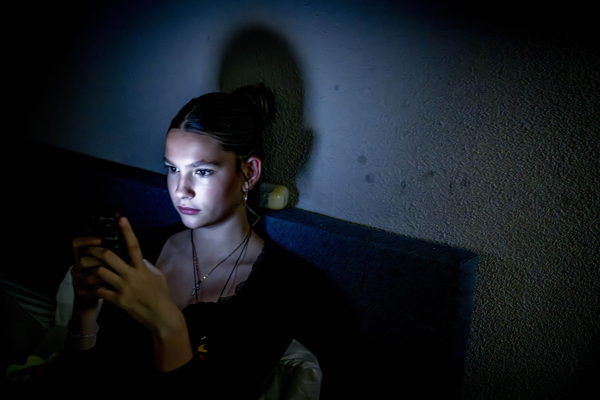

By constantly “rewarding” users with new content, TikTok encourages the urge to keep scrolling. Research has shown that this can lead to compulsive behaviour and impaired self-control, according to the Commission, with detrimental effects on children and teenagers.
In Belgium, there are differences of opinion between governments: the Flemish Media minister, Cieltje Van Achter of N-VA, prefers to leave age verification to the platforms, while the federal Minister for Digital Affairs, Vanessa Matz of Les Engagés, advocates using official apps such as Itsme or MyGov. The Wallonia-Brussels Federation says it supports the ongoing discussions at European and national levels on age verification.
Illustration © PHOTO PRESS ASSOCIATION
Related news