Europe's Foreign ministers discuss options for Strait of Hormuz

European Foreign ministers are discussing whether extending the mandate of the Aspides military mission – set up to protect shipping from attacks by Houthi rebels in Yemen – could help reopen the Strait of Hormuz.
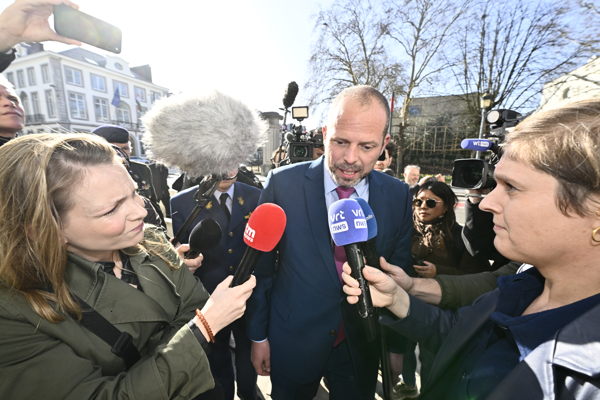
“If we want to have security in this region, it would be easiest to use the operation we already have and maybe change it a little bit,” said Kaja Kallas, the EU’s High Representative for Foreign Policy.
In response to the US and Israeli military offensive against Iran, Tehran has virtually closed the Strait of Hormuz to commercial shipping. This has caused energy prices to rocket, as the strait is important for international oil trade, especially from the Persian Gulf to Asian markets.
Kallas also pointed out the importance of the strait for transporting fertilisers. “If there is a lack of fertilisers this year, there is going to be food deprivation next year,” she warned ahead of Monday’s meeting in Brussels.
'Not NATO's war'
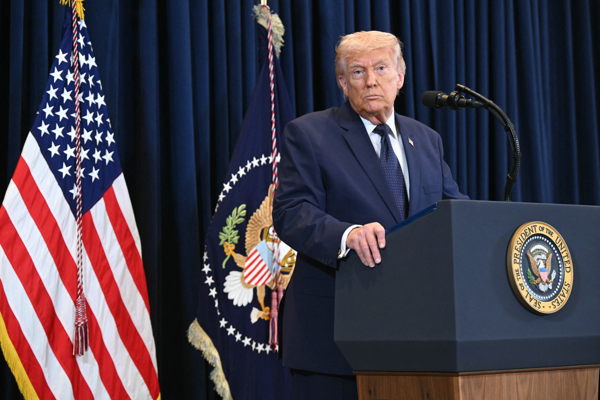
Earlier, US president Donald Trump warned the future for NATO would be “very bad” if allies refused to help the US “police” the strait.
A German government spokesperson said in response that the US-Israeli offensive “has nothing to do with NATO”. “NATO is an alliance for the defence of the territory” of its members and “there is no mandate allowing NATO to intervene” outside its borders, Stefan Kornelius told a press conference. “This war has nothing to do with NATO. It is not NATO’s war.”
"What does Donald Trump expect from, say, a handful or even two European frigates over there in the Strait of Hormuz?”
On Friday, Chancellor Friedrich Merz called for an end to the war, stressing that it “benefited no one and was economically damaging to many”. Trump has since put pressure on China and NATO to help clear the strait, through which a fifth of the world’s crude oil and gas production passes.
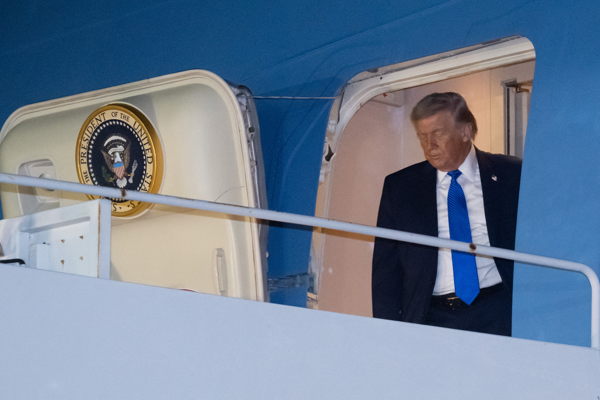

Germany “has taken note” of Trump’s demand, Kornelius said. A spokesperson for the Foreign ministry said Berlin wanted to know from Israel and the US “at what point the military objectives in Iran will have been achieved”, adding: “We can then begin talks with a view to a diplomatic solution.”
Humanitarian aid
Opposed to further military escalation in the region, Germany will not offer military involvement but is prepared “to guarantee, through diplomatic channels, safe passage through the Strait of Hormuz”, Defence minister Boris Pistorius said.
“What does Donald Trump expect from, say, a handful or even two European frigates over there in the Strait of Hormuz?” he asked. “That they accomplish what the mighty US Navy, on its own, cannot manage to do?”
"In a war-torn Middle East, the European Union is stepping up while others step back"
Meanwhile, the European Commission has confirmed an annual allocation of just over 450 million euros for humanitarian aid to Palestine, Lebanon, Syria, Jordan and Egypt in 2026.
The funds are allocated on the basis of need, through the Commission’s network of UN agencies, international organisations and NGOs operating on the ground.
“In a war-torn Middle East, the European Union is stepping up while others step back,” said Belgium’s Hadja Lahbib, the European Commissioner for Humanitarian Aid.
“We are now the largest donor still delivering humanitarian aid in some of the world’s most severe crises, helping people living through the darkest moments of their lives.”
Kaja Kallas in Brussels, 16 March 2026 © PHOTO WIKTOR DABKOWSKI / ZUMA PRESS WIRE
Related news