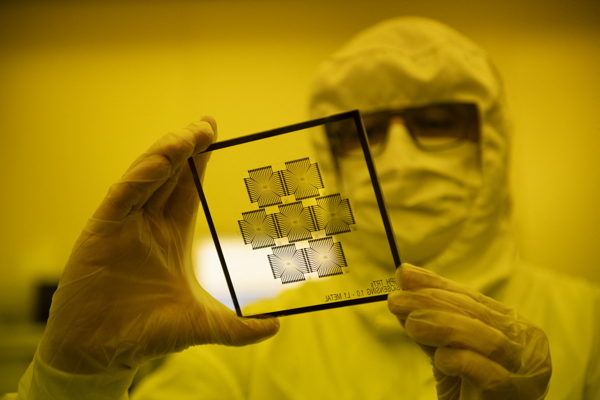
Europe's digital dependence has become a threat, De Wever warns

Belgian prime minister Bart De Wever has called on Europe to act urgently on technological autonomy and a stronger innovation policy. "Our digital dependence has become a threat," he said during a speech in Ghent on technology and innovation on Wednesday.
De Wever's speech concerned Europe's reliance on foreign technology, as much of European data is managed by major American tech firms. "We have actually become tenants in someone else's digital house. Our digital dependence has become a threat. Economically, but also politically," he said.
The prime minister called for greater "digital sovereignty", emphasising that this does not mean isolating Europe but rather strengthening its position in key technological value chains. "We don't necessarily have to be the biggest or the best, but we do have to become indispensable in global value chains," he said.
Growing means relocating
To achieve this, De Wever said Europe must invest more in artificial intelligence, digital infrastructure, cybersecurity and telecom networks. Governments must also create conditions that allow innovation to flourish, he added, as "innovation is not a law of nature. Innovation requires talent and daring".
"We don't necessarily have to be the biggest or the best, but we do have to become indispensable in global value chains"
Currently, Belgian companies often reach a certain size before relocating to the US to scale further. According to De Wever, start-ups and scale-ups find investors and a larger market more quickly elsewhere. Europe must therefore work to create a better functioning capital market and fewer administrative barriers for innovative companies, he said.
To address this, employers' organisation Voka East Flanders presented a Tech Manifesto at the event, outlining nine policy proposals on taxation, share-based remuneration, and attracting international talent to keep companies headquartered in Belgium.
"Industry will only survive in Belgium if we increase productivity"
Voka argues these measures are essential for boosting productivity. The Belgian economy currently grows at just over 1 per cent per year, while productivity growth has slowed to around 0.4 per cent.
"Industry will only survive in Belgium if we increase productivity," Voka director Geert Moerman said. "This can be achieved by using more technology, robotisation and artificial intelligence."
The event took place at the Wintercircus technology hub in Ghent, one of Belgium's most important technology clusters. The city has produced four of the country's seven unicorns, companies valued at more than 1 billion dollars.
#FlandersNewsService | © PHOTO NICOLAS TUCAT / AFP
Related news